
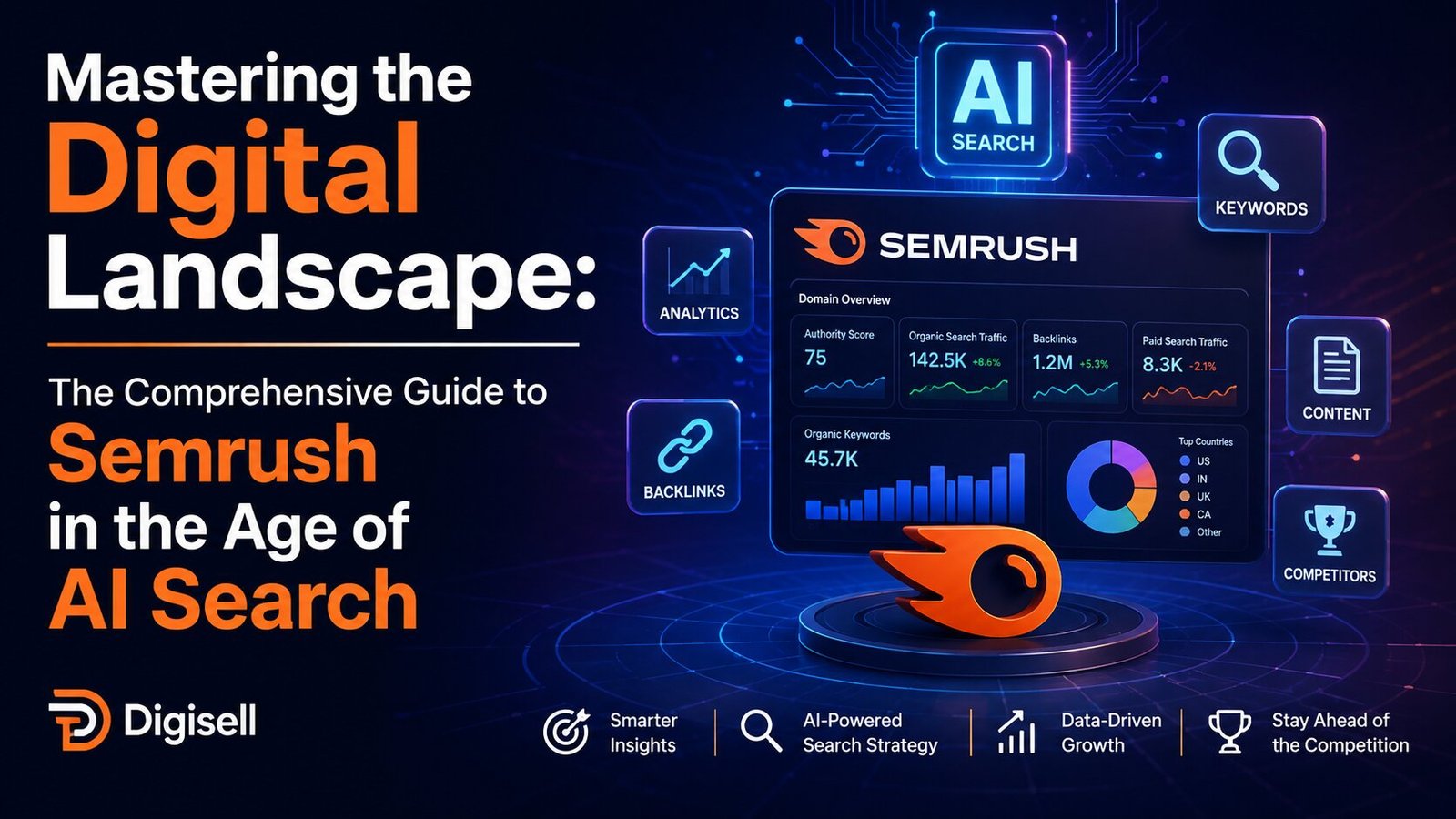
Mastering the Digital Landscape: The Comprehensive Guide to Semrush in the Age of AI Search
Search Engine Optimization (SEO) has evolved far beyond simple keyword stuffing and basic backlink acquisition. In today’s hyper-competitive digital ecosystem, discovery happens everywhere—from traditional search engine result pages (SERPs) to generative AI platforms, conversational assistants, and social forums.
To navigate this complexity, digital marketers, agency owners, and business operators rely on comprehensive toolkits. At the forefront of this digital evolution is Semrush, a platform that has transformed from a traditional keyword research tool into an all-encompassing brand visibility and digital marketing powerhouse.
1. Understanding Semrush: More Than Just an SEO Tool
At its core, Semrush is a Software-as-a-Service (SaaS) platform designed to help businesses optimize their online visibility across multiple channels. While it originated as a tool for checking keyword rankings and competitor traffic, it now bridges the gap between organic search, paid advertising, social media, content marketing, and AI search intelligence.
The platform aggregates massive datasets—covering millions of keywords, domains, and backlinks globally—allowing users to reverse-engineer competitor strategies, discover what audiences are actively searching for, and track their digital footprint in real time.
2. Core Pillars of the Semrush Toolkit
To fully leverage Semrush, it helps to understand how its features are organized into distinct toolkits designed for specific digital marketing workflows:
A. Keyword Research and Market Explorer
Finding out what people are typing—or asking—is the bedrock of any digital strategy.
- Keyword Magic Tool: Gives access to a massive database of keywords, breaking them down by search volume, intent (informational, transactional, navigational), and keyword difficulty.
- Keyword Strategy Builder: Automatically groups related search terms into semantic clusters, helping creators build strong topical authority and logical internal linking structures.
B. Competitive Intelligence and Domain Overview
Knowing your own metrics is only half the battle; understanding your competitors dictates market share.
- Traffic Analytics: Estimates a competitor’s total web traffic, bounce rates, traffic sources (direct, referral, search, social), and desktop versus mobile distribution.
- Domain Overview: Provides a snapshot of any URL’s organic keywords, paid search ads, backlink profile, and historical visibility trends.
C. Technical SEO and Site Health
A website cannot rank well if search engine crawlers encounter technical roadblocks.
- Site Audit: Scans a website for over 140 technical issues, including broken links, slow-loading pages, missing meta tags, canonical errors, and secure HTTPS issues, categorizing them by severity so teams can fix critical fixes first.
D. Content Marketing and On-Page Optimization
Content remains king, but only if it matches user intent and satisfies search quality guidelines.
- SEO Content Template: Analyzes top-ranking rivals for a target keyword and generates a custom brief detailing recommended word counts, semantically related words, readability scores, and backlink targets.
- SEO Writing Assistant: Integrates directly with tools like Google Docs and WordPress to provide real-time optimization feedback on tone of voice, originality, and keyword usage while you write.
3. The Modern Frontier: AI Search and Generative Engine Optimization (GEO)
As search behavior shifts toward conversational AI platforms and zero-click search features, Semrush has expanded its capabilities to help brands maintain authority where modern audiences look for answers.
- AI Visibility Toolkit: Modern search intelligence requires tracking how brands appear in AI-generated answers and multi-platform LLM environments. The toolkit monitors metrics like your AI Visibility Score, estimated monthly AI audience reach, and specific brand mentions or domain citations.
- Prompt Tracking: Traditional rank tracking measures keyword positions on a standard search engine page. Prompt tracking functions similarly for AI, letting marketers monitor how frequently and in what context their brand surfaces when users enter complex, conversational queries into AI engines.
- AI Overview Analysis: Helps businesses optimize content to secure placement inside Google’s AI-driven summary boxes, isolating what differentiates winning URLs from unreferenced competitors.
4. Practical Use Cases: How Professionals Apply Semrush Daily
Different stakeholders use Semrush in unique ways to drive business growth:
- For E-commerce Brands: Store owners use the tool to identify profitable product keywords, spy on competitor ad copy, and uncover technical checkout errors or missing schema markup that might hinder product visibility.
- For Content Creators and Bloggers: Writers utilize topic research and content templates to map out high-performing content pillars, ensuring every article covers subtopics that audiences care about.
- For Digital Agencies: Agencies rely on automated reporting templates, position tracking, and comprehensive site audits to demonstrate clear, data-driven return on investment (ROI) to clients.
5. Best Practices for Maximizing Semrush
To extract the highest value from your subscription, keep these strategic tips in mind:
- Define Your Geographic Scope: Always segment your keyword databases and competitor sets by target location (country, region, or city) to avoid skewed, overly broad data.
- Combine SEO with Content Optimization: Don’t just look at keyword volume. Use search intent filters to ensure you are building the right type of page (e.g., a landing page versus an informational blog post) for what the user wants.
- Monitor Competitor Movement Regularly: Set up automated triggers or regular reviews in the position tracking tool to catch when competitors launch new campaigns or alter their content strategies.
Conclusion
In an era where digital visibility dictates business success, guessing what works is no longer a viable strategy. Semrush equips marketers with the clarity, data granularity, and forward-looking AI analytics needed to cut through the noise. Whether you are troubleshooting technical errors, mapping out an editorial calendar, or managing your brand presence across conversational AI engines, mastering Semrush turns raw data into a clear roadmap for sustainable growth.
ALSO YOU CAN READ:
1 thought on “Mastering the Digital Landscape: The Comprehensive Guide to Semrush in the Age of AI Search”