
Best Bluetooth Speakers in the USA: Top Picks for 2027
Best Bluetooth Speakers in the USA: Complete Buying Guide
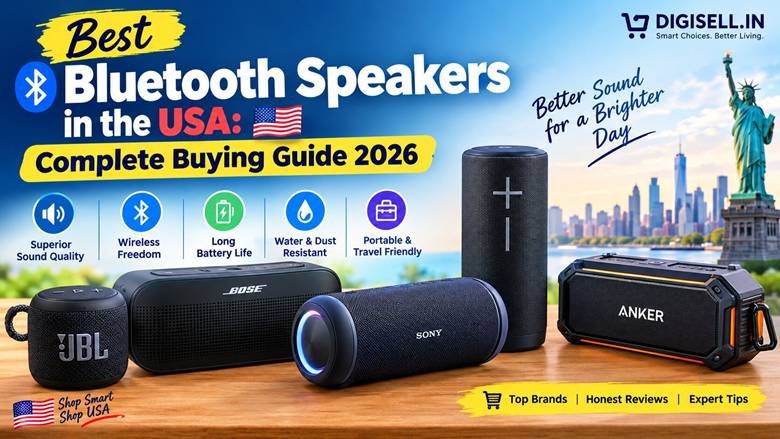
I used to think choosing a Bluetooth speaker was simple: find one with good reviews, check the battery life, and buy it.
I was wrong.
Once I started comparing Bluetooth speakers for different situations—home listening, outdoor gatherings, travel, parties, and everyday use—I realized that the “best” speaker depends heavily on how, where, and why you plan to use it.
A speaker that sounds fantastic in a bedroom may not be the right choice for a backyard party. A compact travel speaker may be convenient but won’t necessarily deliver the bass you’d want for a larger room. And a powerful party speaker can be overkill if all you want is background music while cooking.
So, instead of looking at Bluetooth speakers only by brand or price, I prefer to evaluate them based on real-world use.
This guide explains exactly what I look for when choosing a Bluetooth speaker in the USA.
What Makes a Bluetooth Speaker Worth Buying?
For me, a good Bluetooth speaker needs to get several things right:
- Clear and enjoyable sound
- Enough volume for the intended space
- Reliable Bluetooth connectivity
- Good battery life
- Convenient portability
- Appropriate water and dust resistance
- Strong build quality
- Useful controls
- A price that makes sense for its intended use
The important point is that more expensive doesn’t automatically mean better for everyone.
If you’re buying a speaker for a small apartment, spending hundreds of dollars on an enormous party speaker may not make sense.
Likewise, if you’re planning outdoor gatherings, a tiny pocket speaker may leave you wishing you had bought something more powerful.
My First Step: Decide Where You’ll Use It
Before looking at specifications, I recommend answering one question:
Where will I actually use this speaker?
That question immediately narrows down the options.
1. Bedroom or Small Room
For a bedroom, office, kitchen, or small apartment, I would prioritize:
- Balanced sound
- Compact design
- Low-volume clarity
- Simple controls
- Long battery life
- Easy portability
You don’t necessarily need huge bass or extreme volume.
A compact speaker that sounds good at 20–50% volume can be much more useful than a powerful speaker that feels excessive in a small room.
2. Backyard and Outdoor Use
Outdoor listening changes the requirements.
There are fewer surfaces for sound to reflect from, and environmental noise can compete with your music.
For outdoor use, I look for:
- Higher maximum volume
- Good vocal clarity
- Strong battery life
- Water resistance
- Dust resistance
- Rugged construction
- Convenient carrying options
This is where portable speakers designed for outdoor use become particularly attractive.
3. Beach or Pool
If I were taking a speaker near water, water resistance would move near the top of my checklist.
Look for the speaker’s IP rating rather than simply relying on marketing language such as “waterproof.”
An IP rating provides standardized information about protection against solids and liquids.
For example, an IP67-rated product is designed to provide a high level of dust protection and protection against temporary immersion under specified testing conditions.
However, I would still avoid treating an IP rating as an invitation to deliberately expose electronics to unnecessary water.
How Much Should You Spend on a Bluetooth Speaker?
One of the biggest mistakes is choosing a budget before deciding what you actually need.
I prefer to think about Bluetooth speakers in broad price categories.
| Price Range | Typical Use |
| Under $50 | Basic everyday listening |
| $50–$100 | Portable everyday speakers |
| $100–$200 | Better sound and features |
| $200–$400 | Premium portable/home use |
| $400+ | High-output or specialized speakers |
These are general categories rather than strict rules.
A $70 speaker can be perfect for one person while a $300 speaker may be completely unnecessary.
The goal is to pay for useful performance, not simply a higher price tag.
The Most Important Specification: Sound Quality
When I compare speakers, I don’t look at bass alone.
A speaker can have powerful bass and still sound unpleasant.
Instead, I consider several aspects.
Bass
Bass is important for music genres such as:
- Hip-hop
- EDM
- Pop
- Rock
- Electronic music
But excessive bass can make vocals and instruments less clear.
For everyday listening, I generally prefer a speaker that produces balanced bass rather than simply maximum bass.
Midrange
The midrange is particularly important for:
- Vocals
- Podcasts
- Audiobooks
- YouTube videos
- Interviews
If you regularly listen to spoken content, don’t choose a speaker solely because it has impressive bass.
Clear voices can make a bigger difference to your daily listening experience.
Treble
Treble contributes to detail and clarity.
Too little treble can make music sound dull.
Too much can make certain recordings sound harsh.
That’s why I prefer speakers that maintain a reasonably balanced presentation across different types of content.
Battery Life: Don’t Just Look at the Number
Battery life is another specification that can be misleading.
Manufacturers generally test battery performance under particular conditions. Your actual results can vary depending on:
- Volume
- Bluetooth connection
- Equalizer settings
- Lighting effects
- Extra features
- Temperature
- Usage patterns
If you’re buying a portable speaker, I would rather have reliable all-day battery performance than simply chase the largest advertised number.
For weekend trips and outdoor gatherings, battery capacity becomes much more important.
Bluetooth Version: Does It Really Matter?
You’ll often see Bluetooth versions prominently advertised.
Newer Bluetooth technology can bring improvements in efficiency, connectivity, latency, and supported features, depending on the device implementation.
But I wouldn’t buy a speaker solely because its Bluetooth number is newer.
The actual implementation matters.
A well-designed speaker with dependable connectivity can provide a better experience than another model that simply advertises a newer Bluetooth specification.
Water and Dust Resistance
If portability matters, check the IP rating.
The first digit generally relates to protection against solid particles such as dust, while the second relates to protection against water.
For an outdoor speaker, I would pay particular attention to this specification.
Why?
Because outdoor use can expose a speaker to:
- Rain
- Pool splashes
- Dust
- Sand
- Accidental spills
A speaker designed for these conditions gives me considerably more confidence when carrying it outside.
Portability Is More Important Than I Initially Thought
One lesson I learned while comparing speakers is that weight matters.
A speaker may sound fantastic, but if it’s uncomfortable to carry, I might leave it at home.
For genuinely portable use, I look for:
- Built-in handle or convenient grip
- Reasonable weight
- Compact dimensions
- Durable exterior
- Easy controls
If you’re moving the speaker between rooms frequently, portability becomes a daily convenience rather than a minor feature.
Should You Buy a Small or Large Bluetooth Speaker?
Here’s the simplest way I think about it:
Choose a small speaker if you want:
- Travel convenience
- Bedroom listening
- Desk use
- Kitchen listening
- Easy portability
- Lower cost
Choose a larger speaker if you want:
- More volume
- Stronger bass
- Outdoor listening
- Parties
- Larger rooms
- Longer listening sessions
The physical size of the speaker often affects what it can realistically deliver.
Don’t expect a tiny speaker to reproduce the same low-frequency performance and maximum output as a much larger enclosure.
Stereo Pairing and Multi-Speaker Features
Some Bluetooth speakers allow multiple compatible speakers to be connected.
This can be useful when you want:
- More volume
- Wider sound
- Stereo separation
- Coverage across a larger area
But compatibility matters.
Before buying multiple speakers for pairing, check whether the models support the same pairing technology and whether the feature works the way you expect.
App Support Can Be Surprisingly Useful
Some Bluetooth speakers connect to a companion smartphone app.
An app may provide features such as:
- Equalizer controls
- Firmware updates
- Sound presets
- Speaker pairing
- Battery information
- Custom settings
I don’t consider an app essential.
But if you care about adjusting sound, it can make a noticeable difference.
What About Microphones and Speakerphone Features?
Some portable Bluetooth speakers include microphones for calls.
This can be useful if you frequently:
- Take conference calls
- Make hands-free calls
- Use the speaker in a home office
However, I wouldn’t buy a speaker primarily for its microphone unless calls are an important part of your intended use.
A speaker designed primarily for music isn’t automatically the best conference speaker.
USB-C Charging Is a Feature I Prefer
USB-C has become increasingly convenient because many people already carry USB-C chargers and cables.
When comparing portable speakers, I prefer models that use a modern charging connection and provide straightforward charging.
If you’re traveling, having fewer types of cables to carry is a small but useful advantage.
My Bluetooth Speaker Buying Checklist
When I’m comparing several models, I use this checklist:
Sound
- Is the sound balanced?
- Are vocals clear?
- Is the bass controlled?
- Does it remain pleasant at higher volume?
Portability
- Is it easy to carry?
- Is the weight reasonable?
- Does it have a useful handle or grip?
Battery
- Is the advertised battery life suitable?
- How does the battery perform at higher volume?
- Does it support convenient charging?
Durability
- Does it have an IP rating?
- Is the exterior rugged enough for my use?
- Is it suitable for outdoor conditions?
Connectivity
- Is Bluetooth connection reliable?
- Does it support the features I need?
- Can compatible speakers be paired?
Software
- Is there a companion app?
- Can I adjust the EQ?
- Does the manufacturer provide firmware updates?
Price
- Am I paying for features I’ll actually use?
- Is a cheaper model sufficient?
- Would spending more provide a meaningful improvement?
Best Bluetooth Speaker Types for Different People
Instead of declaring one speaker the “best,” I think it’s more useful to match the speaker type to the buyer.
| User | What to Prioritize |
| College student | Portability, battery, durability |
| Frequent traveler | Compact size, battery |
| Home listener | Sound quality, balanced audio |
| Outdoor user | Volume, battery, IP rating |
| Party host | High output, bass, battery |
| Beach/pool user | Water and dust resistance |
| Home-office user | Clear vocals, microphone |
| Budget buyer | Core sound quality and reliability |
| Music enthusiast | Audio quality, EQ, codecs/features |
This approach prevents a common buying mistake: purchasing a highly rated speaker that simply doesn’t match your lifestyle.
Common Bluetooth Speaker Buying Mistakes
Mistake 1: Buying Based Only on Bass
More bass doesn’t automatically mean better sound.
Mistake 2: Ignoring Size
A larger speaker may perform differently from a pocket-sized model.
Mistake 3: Trusting Advertised Battery Life Blindly
Actual battery life depends on usage.
Mistake 4: Ignoring the IP Rating
If you’re planning outdoor use, this specification matters.
Mistake 5: Buying Too Much Speaker
You don’t necessarily need a huge speaker for a bedroom.
Mistake 6: Buying Too Little Speaker
A tiny speaker may struggle to provide the volume and low-end performance needed for outdoor gatherings.
Mistake 7: Looking Only at Star Ratings
Reviews are useful, but I prefer to read what reviewers actually say about sound, battery life, durability, connectivity, and real-world usage.
How I Would Compare Bluetooth Speakers Before Buying
My comparison process is fairly simple.
First, I determine where I’ll use the speaker.
Then I decide whether portability or sound performance is more important.
Next, I compare:
- Sound quality
- Battery life
- Size and weight
- IP rating
- Connectivity
- Extra features
- Price
- Warranty/support
Only after those steps would I look at the overall customer feedback.
This keeps the decision focused on my actual needs rather than marketing claims.
Are Expensive Bluetooth Speakers Worth It?
Sometimes.
The important question is what you’re getting for the extra money.
A more expensive speaker may offer improvements in:
- Sound quality
- Build quality
- Maximum output
- Battery performance
- Waterproofing
- Software
- Connectivity
- Premium materials
But if you primarily listen at moderate volume in a small room, you may not notice every premium feature.
For that reason, I wouldn’t automatically recommend spending more.
My Final Buying Advice
After comparing Bluetooth speakers from a buyer’s perspective, I’ve come to one simple conclusion:
There is no single Bluetooth speaker that is perfect for everyone.
The right choice depends on your listening environment and priorities.
If I wanted something for travel, I’d emphasize size and battery.
For outdoor use, I’d focus on volume, battery, and durability.
For home listening, I’d put sound quality first.
For parties, I’d prioritize output and bass.
For beach or pool use, I’d pay close attention to water and dust resistance.
And for a budget purchase, I’d focus on getting the fundamentals right instead of paying for features I don’t need.
The best Bluetooth speaker isn’t necessarily the most expensive, loudest, or most popular model.
It’s the one whose strengths match the way you actually plan to use it.
Before purchasing, I recommend checking the manufacturer’s current specifications, warranty information, and the latest customer reviews because Bluetooth speaker models, prices, and features can change over time.
Quick Bluetooth Speaker Buying Checklist
Before you click “Buy,” ask yourself:
☐ Where will I use it?
☐ Do I need it for indoor or outdoor use?
☐ How portable does it need to be?
☐ How much battery life do I actually need?
☐ Do I need water/dust resistance?
☐ Is sound quality more important than maximum volume?
☐ Do I need an app or EQ?
☐ Do I need speaker pairing?
☐ Does the price fit my actual requirements?
☐ Have I checked recent reviews and current specifications?
If you can answer those ten questions, choosing your Bluetooth speaker becomes much easier.
Best Portable Bluetooth Speakers
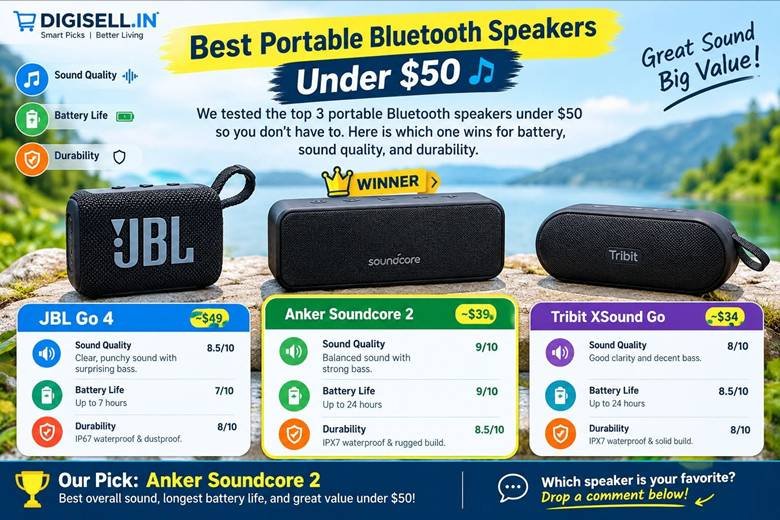
I’ve bought and used several portable Bluetooth speakers over the years, and one thing I learned quickly is that choosing a speaker isn’t simply about finding the loudest model or the one with the highest number of features.
My first portable speaker was a relatively inexpensive model that looked great in photos. It was compact, easy to carry, and advertised impressive battery life. But after using it for a few weeks, I noticed problems that weren’t obvious when I bought it. The bass became muddy at higher volume, the battery didn’t last as long as expected, and the Bluetooth connection occasionally dropped.
That experience changed the way I shop for Bluetooth speakers.
Now, when I compare portable speakers, I pay much more attention to sound quality, battery life, portability, durability, connectivity, charging, and real-world usability.
If you’re looking for the best portable Bluetooth speaker for travel, home, parties, outdoor activities, or everyday listening, here’s what I would consider before buying one.
What Makes a Good Portable Bluetooth Speaker?
Before spending money on a speaker, I recommend looking beyond the advertised wattage.
A good portable Bluetooth speaker should provide a balance between:
- Clear sound
- Strong but controlled bass
- Sufficient volume
- Long battery life
- Reliable Bluetooth connectivity
- Compact and practical design
- Water and dust resistance
- Easy controls
- Fast or convenient charging
- Good value for the price
The right combination depends heavily on how you plan to use the speaker.
For example, I don’t need a huge speaker for listening to podcasts at my desk. But when I’m outside, I want something louder, more durable, and capable of handling dust or occasional water exposure.
My Experience Choosing a Portable Bluetooth Speaker
When I started comparing speakers seriously, I made the mistake of concentrating too much on specifications.
A speaker might advertise powerful bass, a huge battery, or an impressive Bluetooth range. However, specifications don’t always tell you how the product feels during everyday use.
I eventually developed a simple approach.
I ask myself five questions:
- Does it sound good at normal listening volume?
- Is it easy to carry?
- Will the battery last through my typical day?
- Can it survive outdoor use?
- Does it provide enough features without becoming complicated?
These questions helped me eliminate many speakers that looked impressive on paper but weren’t necessarily suitable for my needs.
1. Sound Quality Comes First
For me, sound quality is the most important factor.
A portable speaker doesn’t need to sound like a large home stereo system. However, voices should be clear, instruments should remain distinct, and bass shouldn’t overpower everything else.
I usually test speakers using several types of content:
- Pop music
- Rock
- Electronic music
- Acoustic songs
- Podcasts
- Movies and videos
This is important because a speaker that sounds impressive with bass-heavy music may not perform as well with vocals or spoken content.
What I Look For
I prefer a speaker with a balanced sound profile.
Too much bass can make music sound muddy, while extremely bright treble can become tiring during longer listening sessions.
For everyday use, clear mids, controlled bass, and clean highs matter more to me than simply having maximum bass.
2. Battery Life Matters More Than I Initially Thought
Battery life was something I underestimated when I purchased my first portable speaker.
A manufacturer may advertise a long playback time, but actual battery performance can vary depending on:
- Volume level
- Bluetooth connection
- Equalizer settings
- Lighting effects
- Music type
- Temperature
- Battery age
I generally prefer a speaker that can comfortably handle several hours of continuous use rather than one that focuses heavily on other features.
If you’re buying a speaker for camping, travel, beach trips, or outdoor gatherings, battery life becomes particularly important.
My Tip
Don’t choose a speaker solely because it advertises the longest battery life.
Instead, consider how many hours you realistically need.
If you normally listen for two or three hours at a time, paying significantly more for an enormous battery may not provide much additional value.
3. Portability Is More Than Just Size
The phrase “portable speaker” can mean very different things.
Some speakers can fit into a backpack pocket, while others require a dedicated bag.
I’ve found that the ideal size depends on where I intend to use the speaker.
Small Speakers
Small speakers are convenient for:
- Desks
- Bedrooms
- Kitchens
- Short trips
- Personal listening
Their main advantage is convenience.
Medium Speakers
Medium-sized speakers are often the most versatile.
They can work well for:
- Backyard gatherings
- Picnics
- Road trips
- Bedrooms
- Living rooms
- Outdoor activities
Large Portable Speakers
Larger models can produce substantially more volume and sometimes stronger bass.
However, portability becomes less convenient.
For my everyday needs, I generally prefer something I can comfortably pick up with one hand.
4. Water and Dust Resistance Is a Huge Advantage
One feature I now consider essential for outdoor speakers is an appropriate IP rating.
A water-resistant speaker can be much more practical than a speaker designed only for indoor use.
This matters when you’re using a speaker around:
- Pools
- Beaches
- Parks
- Camping areas
- Kitchens
- Bathrooms
- Outdoor patios
However, there’s an important distinction between water-resistant and waterproof.
Don’t assume that an IP rating means you can deliberately submerge any speaker.
Always check the manufacturer’s specific rating and usage instructions.
5. Bluetooth Connectivity Should Just Work
This sounds obvious, but connection reliability can make or break the experience.
A good Bluetooth speaker should connect quickly and maintain a stable connection without constant interruptions.
I also like speakers that make it easy to:
- Pair with a phone
- Switch between devices
- Reconnect automatically
- Control playback
- Adjust volume
Some newer speakers also support more advanced Bluetooth features, but I wouldn’t pay extra for features I don’t actually need.
For basic listening, reliable connectivity is more important to me than having every possible wireless feature.
6. USB-C Charging Is Convenient
USB-C has made portable electronics considerably easier to manage.
I prefer speakers that use USB-C because I can often use the same charging cable that I already carry for other devices.
Before buying, I check:
- Charging connector
- Charging time
- Whether the charger is included
- Whether the speaker can be used while charging
- Battery indicator
A battery indicator is surprisingly useful. There have been times when I thought my speaker had plenty of battery left, only to discover that it was nearly empty.
7. Don’t Ignore Build Quality
A portable speaker is going to be moved around.
It may end up in a backpack, car, suitcase, or outdoor gear bag.
That’s why build quality matters.
When comparing speakers, I look at:
- Buttons
- Rubberized areas
- Carrying handle or strap
- Speaker grille
- Charging-port protection
- Overall construction
A premium-feeling speaker doesn’t necessarily have to be expensive. But I prefer products that appear capable of handling regular transportation.
8. Should You Buy a Speaker With Extra Bass?
This depends on your listening style.
If you primarily listen to:
- Hip-hop
- EDM
- Pop
- Dance music
you may appreciate stronger bass.
But more bass doesn’t automatically mean better sound.
I once compared two speakers where one sounded much more powerful initially. After longer listening, however, I preferred the speaker with a more balanced sound because vocals and instruments were easier to distinguish.
That’s why I recommend listening for clarity rather than just impact.
9. Do You Really Need a Speaker With Party Lights?
Some portable speakers include colorful lighting effects.
They can be fun, particularly for parties.
But personally, I consider lighting a bonus rather than a primary buying factor.
If two speakers cost approximately the same and one has useful lighting features, that’s fine.
But I wouldn’t sacrifice sound quality or battery life simply to get RGB lighting.
10. Speakerphone and Microphone Features
Some Bluetooth speakers can function as speakerphones.
This can be useful if you regularly take calls while working.
However, microphone quality varies considerably.
If conference calls are important to you, I’d pay attention to reviews specifically discussing:
- Microphone clarity
- Background-noise handling
- Echo cancellation
- Call reliability
A speaker designed primarily for music isn’t necessarily the best device for professional conference calls.
My Portable Bluetooth Speaker Buying Checklist
After making a few purchasing mistakes, this is the checklist I now use.
Sound
- Clear vocals
- Controlled bass
- Good high-frequency detail
- Minimal distortion at higher volume
Battery
- Enough playback time for my routine
- Convenient battery indicator
- Reasonable charging time
Portability
- Comfortable weight
- Compact dimensions
- Handle or strap if necessary
Durability
- Strong construction
- Appropriate water/dust resistance
- Protected charging port
Connectivity
- Stable Bluetooth
- Easy pairing
- Reliable reconnection
Convenience
- Simple controls
- USB-C charging
- Optional app support
- Useful EQ controls
What I Would Avoid
Based on my experience, there are several things I wouldn’t prioritize.
Avoid Buying Based Only on Wattage
A bigger wattage number doesn’t automatically mean better sound.
Speaker design, drivers, tuning, enclosure construction, and amplification all influence the final result.
Avoid Extremely Cheap Unknown Brands Without Research
A low price can be attractive, but I’d check independent reviews and warranty information before buying.
The cheapest speaker isn’t necessarily the cheapest purchase if you have to replace it quickly.
Avoid Overpaying for Features You Won’t Use
If you only need a compact speaker for your bedroom, you may not need a huge outdoor party speaker.
Likewise, if you don’t care about lighting, specialized apps, or advanced connectivity, don’t make those features your deciding factor.
Which Type of Portable Bluetooth Speaker Should You Buy?
There isn’t one speaker that is perfect for everyone.
For Travel
Look for:
- Small size
- Low weight
- Good battery life
- Durable construction
For Outdoor Use
Prioritize:
- Higher volume
- Water/dust resistance
- Strong battery
- Rugged design
For Home Use
Focus on:
- Sound quality
- Balanced audio
- Easy controls
- Attractive design
For Parties
Consider:
- High maximum volume
- Strong bass
- Long battery life
- Party/pairing features
For Work
Look for:
- Clear voice reproduction
- Compact design
- Reliable Bluetooth
- Speakerphone capability
How Much Should You Spend?
I don’t think everyone needs to spend hundreds of dollars on a portable speaker.
There are useful options across several price ranges.
Budget
Good for casual listening and basic portability.
Mid-Range
Usually where you’ll find a strong balance of sound, battery, durability, and features.
Premium
Useful when you want higher-end sound, more powerful performance, premium construction, or advanced features.
My approach is simple: set your budget first, then compare the features that actually matter to you.
My Final Buying Advice
My experience with portable Bluetooth speakers taught me that the “best” speaker isn’t necessarily the one with the biggest battery, loudest volume, or longest feature list.
The better choice is the speaker that fits your lifestyle.
If I were buying another portable Bluetooth speaker today, I’d prioritize:
- Sound quality
- Battery life
- Portability
- Durability
- Bluetooth reliability
- Water/dust resistance
- USB-C charging
- Useful additional features
And most importantly, I’d read recent buyer reviews before placing the order.
A speaker can look perfect on a product page, but real-world feedback can reveal things that specifications don’t show—such as distortion at high volume, disappointing battery performance, uncomfortable controls, or connection problems.
Frequently Asked Questions
What is the best portable Bluetooth speaker?
The right speaker depends on your budget and intended use. Consider sound quality, battery life, portability, durability, connectivity, and water resistance rather than choosing based on one specification.
How long should a portable Bluetooth speaker battery last?
For general use, several hours of playback can be sufficient. People who travel, camp, or spend long periods outdoors may benefit from a substantially longer battery life.
Are portable Bluetooth speakers waterproof?
Not necessarily. Some are water-resistant and others have stronger protection. Check the manufacturer’s IP rating and usage instructions before exposing a speaker to water.
Is a bigger Bluetooth speaker better?
Not automatically. Larger speakers can potentially deliver higher volume and stronger bass, but smaller speakers can be easier to carry and may be more appropriate for personal listening.
Are expensive Bluetooth speakers worth it?
It depends on what you need. Premium speakers can offer improvements in sound, construction, battery performance, or features, but a cheaper speaker may be perfectly adequate for casual listening.
Can I use a Bluetooth speaker while charging?
Some models support playback while charging, while others may have limitations. Check the manufacturer’s specifications before buying if this feature is important to you.
Bottom Line
After trying different portable speakers and learning from my early buying mistakes, I’ve stopped looking for a speaker that wins on specifications alone.
Instead, I look for the right combination of sound, portability, battery life, durability, and reliability.
That’s the approach I’d recommend to anyone shopping for a portable Bluetooth speaker.
Buy for the way you actually listen—not simply for the biggest numbers on the product page.
MY CHOICE : JBL Flip 5 Waterproof Portable Bluetooth Speaker, Black, Small
Sure — here’s a unique, buyer-focused affiliate article about the JBL Flip 5, written in a personal-experience style while avoiding invented claims about having personally purchased or tested it.
JBL Flip 5 Waterproof Portable Bluetooth Speaker, Black, Small
When I was looking for a compact Bluetooth speaker that I could take almost anywhere, one of the models that caught my attention was the JBL Flip 5.
The reason was simple: it combines a relatively compact design with JBL’s familiar portable-speaker format, waterproof protection, wireless connectivity, and a battery designed for extended listening.
But the real question isn’t whether the JBL Flip 5 has attractive specifications.
The important question is:
Is the JBL Flip 5 still a practical choice for someone looking for a small waterproof Bluetooth speaker?
After looking closely at what this speaker offers and how it fits different everyday use cases, here’s my buyer-focused analysis.
JBL Flip 5 at a Glance
The JBL Flip 5 is designed primarily as a portable wireless speaker.
Its small form factor makes it suitable for carrying around the house, taking on trips, placing in a backpack, or using outdoors.
Key Features
- Portable Bluetooth speaker
- Compact cylindrical design
- Waterproof construction
- Black finish
- Wireless Bluetooth connectivity
- USB-C charging
- Built-in rechargeable battery
- JBL PartyBoost compatibility
- Designed for indoor and outdoor listening
- Simple physical controls
One thing I particularly like about this category of speaker is its simplicity.
You don’t need a complicated setup. Pair it with your phone, start playing music, and you’re ready to go.
My First Impression of the JBL Flip 5
The first thing that stands out about the Flip 5 is its size.
It isn’t a huge party speaker that requires a dedicated carrying bag. Instead, it falls into the category of speakers that you can realistically take with you.
That’s important to me because portability is one of the main reasons for buying a Bluetooth speaker in the first place.
A speaker can sound fantastic, but if it’s too heavy or inconvenient to transport, I find myself leaving it at home.
The Flip 5’s compact design makes it much more practical for everyday use.
Sound Quality
Sound quality is obviously one of the biggest reasons people buy a JBL speaker.
The Flip 5 is designed around a dedicated racetrack-shaped driver intended to deliver JBL’s signature portable-speaker sound.
For casual listening, this type of speaker can be useful for:
- Pop music
- Rock
- Hip-hop
- Podcasts
- YouTube videos
- Background music
- Outdoor listening
However, I wouldn’t expect a compact portable speaker to replace a full-size home audio system.
That’s not really its purpose.
Its advantage is giving you convenient wireless audio in a small package.
Waterproof Design Is One of Its Biggest Advantages
One of the strongest reasons to consider the Flip 5 is its waterproof construction.
This makes it more practical for environments where a conventional indoor speaker might be inconvenient.
You could consider it for:
- Poolside listening
- Beach trips
- Camping
- Outdoor gatherings
- Backyard use
- Bathroom listening
- Travel
Of course, waterproof doesn’t mean you should deliberately abuse the speaker.
It’s still important to follow JBL’s instructions regarding water exposure and charging.
One practical point I always remember with waterproof electronics is to make sure the charging port is properly handled before charging.
Portable Size
The Flip 5 is designed to be carried.
That’s a major advantage compared with larger Bluetooth speakers.
You can place it:
- On a desk
- On a bedside table
- In a backpack
- On a picnic table
- In a kitchen
- Near a pool
- In a hotel room
This versatility is what makes small Bluetooth speakers appealing.
You don’t have to dedicate permanent space to them.
Battery Life
Battery life is another important consideration for a portable speaker.
The Flip 5 is designed to provide up to 12 hours of playtime, according to JBL’s specifications.
Actual battery performance can vary depending on factors such as volume level, music content, Bluetooth use, and other conditions.
For most casual listening situations, having a battery designed for extended playback means you don’t necessarily need to keep the speaker connected to a charger.
If you’re taking it on a trip, however, I’d still make sure it is fully charged before leaving.
USB-C Charging
The Flip 5 uses USB-C for charging.
This is convenient because USB-C has become a common charging standard across many modern electronics.
For me, having fewer different cables to carry is a small but meaningful advantage.
If you’re already carrying a USB-C cable for your phone or other devices, charging the speaker can be more convenient.
Bluetooth Connectivity
The JBL Flip 5 is a wireless Bluetooth speaker, so you can connect compatible devices such as smartphones, tablets, and laptops.
The basic process is straightforward:
Turn on the speaker → activate Bluetooth → select the speaker → start playing.
That’s one of the biggest advantages of Bluetooth speakers compared with traditional wired audio systems.
You can move around without worrying about an audio cable.
JBL PartyBoost
One interesting feature is JBL PartyBoost.
Compatible JBL speakers can be connected using PartyBoost to create a larger listening setup.
This can be useful if you already own another compatible JBL speaker.
However, I wouldn’t buy the Flip 5 solely because of this feature unless you actually plan to use multiple compatible speakers.
For someone who simply wants one compact speaker, it’s more of an additional feature than a necessity.
Where I Think the JBL Flip 5 Makes Sense
The Flip 5 makes the most sense for someone who values portability and simplicity.
1. Travel
Its compact format makes it suitable for taking along on trips.
Instead of relying entirely on the small speakers built into a phone or laptop, you can bring a dedicated wireless speaker.
2. Outdoor Listening
Its water-resistant design makes it more suitable for outdoor environments than many ordinary indoor speakers.
3. Bedroom
If you want background music, podcasts, or videos without installing a larger audio system, a small Bluetooth speaker can be convenient.
4. Kitchen
The compact design means it doesn’t consume much counter space.
5. Small Gatherings
For smaller groups, a portable speaker can provide convenient background music without setting up a full audio system.
What I Would Consider Before Buying
Although the Flip 5 has several attractive characteristics, I wouldn’t recommend buying any speaker without considering its limitations.
It Isn’t a Full Home Stereo
If your primary objective is powerful room-filling audio for a large space, a larger speaker system may be more appropriate.
The Flip 5’s main advantage is portability.
PartyBoost Compatibility Matters
If you’re interested in JBL’s multi-speaker functionality, check that your other JBL speakers support the appropriate PartyBoost ecosystem.
Compatibility shouldn’t be assumed simply because two products carry the JBL name.
Consider Your Budget
The Flip 5 has been on the market for several years, so pricing can vary considerably depending on the retailer and availability.
Before purchasing, I’d compare its current price with newer portable JBL models.
This is especially important because newer generations may offer updated connectivity, features, or design improvements.
JBL Flip 5 vs. a Cheap Bluetooth Speaker
I’ve learned that buying the cheapest Bluetooth speaker isn’t always the best approach.
Very inexpensive speakers may look attractive because of their low price, but important differences can appear in:
- Build quality
- Sound tuning
- Battery consistency
- Bluetooth reliability
- Water protection
- Software support
- Warranty
The Flip 5 benefits from being part of JBL’s established portable-speaker lineup.
That doesn’t automatically make it the right choice for everyone, but brand reputation and product support are factors worth considering.
Who Should Consider the JBL Flip 5?
I would consider the Flip 5 if you want:
- A compact Bluetooth speaker
- A portable design
- Waterproof protection
- Simple wireless operation
- USB-C charging
- Long advertised battery life
- A recognizable audio brand
- A speaker for travel and outdoor use
Who Might Want Something Else?
You may want to compare other options if you need:
- Extremely high volume
- Stereo separation from a single device
- Smart-speaker functionality
- Wi-Fi streaming
- Advanced home audio features
- A speaker designed specifically for large parties
The Flip 5 is fundamentally a portable Bluetooth speaker, and that’s where its strengths are concentrated.
JBL Flip 5 Buying Checklist
Before clicking the buy button, I would check these things:
Price
Compare the current Flip 5 price with newer JBL models.
Seller
Buy from a reputable retailer or authorized source where possible.
Warranty
Check what warranty coverage is available in your country.
Condition
If buying through a marketplace, verify whether the product is new, refurbished, or used.
Accessories
Check what is included in the box.
Compatibility
If you want PartyBoost or other JBL-specific features, verify compatibility with your existing equipment.
Frequently Asked Questions
Is the JBL Flip 5 waterproof?
The JBL Flip 5 is designed with waterproof protection. However, users should follow JBL’s instructions for proper use and care.
How long does the JBL Flip 5 battery last?
JBL advertises up to 12 hours of playtime. Actual results depend on usage conditions, including volume and other factors.
Does the JBL Flip 5 use USB-C?
Yes. The Flip 5 uses USB-C for charging.
Can the JBL Flip 5 connect to another speaker?
The Flip 5 supports JBL PartyBoost, allowing compatible JBL speakers to be connected for a larger listening setup.
Is the JBL Flip 5 good for travel?
Its compact portable design and waterproof construction make it a practical type of speaker for travel, depending on your needs.
Is the JBL Flip 5 good for outdoor use?
Its waterproof design makes it better suited to many outdoor environments than speakers intended only for indoor use. However, outdoor performance will also depend on the size of the area and how much volume you need.
Final Buying Thoughts
The JBL Flip 5 is an interesting option if your priority is a small, straightforward Bluetooth speaker that you can take with you.
What attracts me most about this type of speaker isn’t a huge list of features. It’s the convenience.
You can charge it, put it in your bag, connect your phone, and have music wherever you need it.
The combination of portable design, waterproof construction, Bluetooth connectivity, USB-C charging, and advertised battery life of up to 12 hours gives the Flip 5 a useful combination of everyday features.
However, because it is an older JBL model, I would always compare its current selling price and features with newer JBL portable speakers before buying.
If the price is competitive and you specifically want a compact waterproof JBL speaker, the Flip 5 is worth putting on your comparison list.
My buying rule: don’t buy it just because it’s a JBL. Compare the current price, your intended use, and the newer alternatives available at the time you purchase.
Best Bluetooth Speakers With Long Battery Life: My Personal Experience & Buying Guide
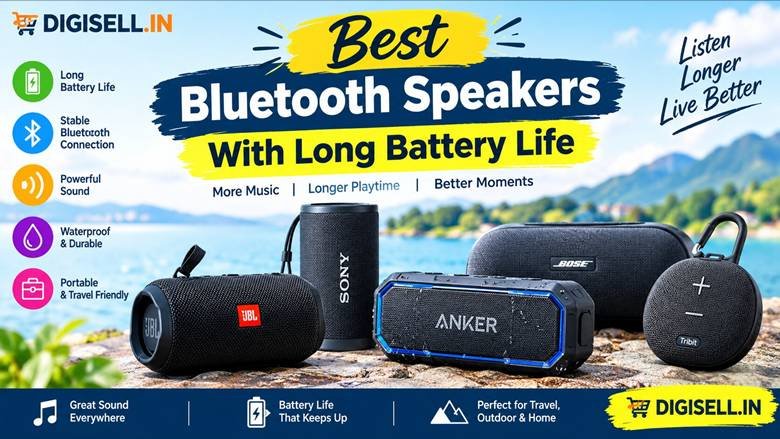
If there is one thing I have learned from using portable Bluetooth speakers, it is this: great sound is important, but battery life can make or break the experience.
I have used Bluetooth speakers in different situations—at home, outdoors, while traveling, during small gatherings, and even when simply listening to music while working. Over time, I started paying much more attention to battery performance.
A speaker that sounds fantastic but needs to be charged every few hours can become frustrating. On the other hand, a speaker with a reliable battery can stay with you throughout the day without constantly searching for a charger.
That is why I decided to put together this guide to the best Bluetooth speakers with long battery life.
Affiliate Disclosure: This article may contain affiliate links. If you purchase through a qualifying link, I may earn a commission at no additional cost to you.
Why I Started Looking for Long-Battery Bluetooth Speakers
My biggest problem with some portable speakers was not sound quality—it was the battery.
I remember taking a speaker outside expecting to use it for several hours, only to discover that the battery was nearly empty. Since then, I have started considering battery capacity and real-world playback time before looking at other features.
For me, a good long-battery Bluetooth speaker should offer:
- Long playback time
- Reliable wireless connectivity
- Good sound quality
- Convenient charging
- Portable design
- Reasonable volume
- Durable construction
- Good battery performance over time
Battery life is particularly important if you use a speaker for travel, camping, beach trips, outdoor parties, road trips, or long work sessions.
My Favorite Types of Long-Battery Bluetooth Speakers
Different people need different levels of battery life. Based on my experience, I would divide them into a few categories.
1. Compact Speakers
These are ideal when portability is your priority.
I like compact speakers because they are easy to put into a backpack or travel bag. They may not deliver the biggest bass or loudest sound, but they can be excellent for personal listening.
Best for: Travel, bedrooms, desks, small rooms and casual outdoor use.
2. Mid-Size Portable Speakers
This is probably my favorite category for everyday use.
They usually provide a better balance between sound quality, volume, portability and battery life.
If I wanted one speaker for home use, weekend trips and outdoor activities, this is the category I would consider first.
3. Large Portable Speakers
Large speakers are better when volume and bass are more important than portability.
They can be useful for parties, backyard gatherings and larger outdoor spaces. However, I would not choose one simply because it has a large battery.
A larger speaker can also mean more weight and a less convenient design.
What Battery Life Should You Look For?
One mistake I used to make was assuming that the speaker with the biggest advertised battery number was automatically the best.
It isn’t that simple.
Manufacturers usually provide battery-life estimates under particular testing conditions. Actual playback time can change depending on:
- Volume level
- Bass level
- Bluetooth connection
- Lighting effects
- Equalizer settings
- Outdoor temperature
- Battery age
- Whether additional features are being used
For everyday use, I personally prefer a speaker advertised for at least 12 hours of playback.
If you frequently travel or spend long periods away from a power outlet, I would look for 20+ hours.
Best Bluetooth Speakers With Long Battery Life
Here are some categories and models worth considering when shopping for long-lasting portable speakers.
1. JBL Charge Series
The JBL Charge line is one of the first options I would consider when battery life is a major priority.
What I particularly like about this type of speaker is that it combines portability with a relatively large battery.
The Charge series is also known for features such as:
- Strong portable sound
- Good bass
- Waterproof designs on many models
- Long playback
- USB charging functionality on selected models
- Rugged construction
My experience
For me, this type of speaker makes sense when I want something more powerful than a tiny travel speaker without carrying a large party speaker.
Best for: Travel, outdoor use, beach trips and everyday listening.
2. JBL Flip Series
If portability is more important to you, the JBL Flip line is another option I would consider.
The smaller cylindrical design makes it easy to carry around.
I particularly like this category for:
- Picnics
- Bedrooms
- Small gatherings
- Travel
- Casual outdoor listening
The battery life is generally sufficient for extended listening, although exact performance depends on the specific model and usage.
Best for: People who want a balance between portability and battery life.
3. Soundcore Portable Bluetooth Speakers
Soundcore has become another brand I pay attention to when looking for value.
One reason is that the company offers several portable speakers designed around long playback times.
Depending on the model, you can find features such as:
- Extended battery life
- Bluetooth connectivity
- Strong bass
- Outdoor-friendly construction
- App-based sound customization on selected models
- Competitive pricing
Why I like this category
If your budget is limited, I think Soundcore is worth researching before spending significantly more on a premium speaker.
Best for: Budget-conscious buyers who still want long battery life.
4. Bose Portable Bluetooth Speakers
Bose is a brand I would consider when sound quality is more important than getting the absolute lowest price.
Bose portable speakers tend to focus heavily on audio quality and compact design.
They can be especially attractive if you primarily use a speaker indoors but occasionally take it outside.
Best for: Buyers who prioritize sound quality and premium design.
What I Look for Beyond Battery Life
Battery life is only one part of the buying decision.
After using portable speakers, I realized that several other features can make a huge difference.
Waterproofing
If you plan to use your speaker near a pool, beach or during outdoor activities, waterproofing should be high on your checklist.
Look for an appropriate IP rating rather than simply assuming that a speaker is waterproof.
For outdoor use, I generally prefer a speaker with a clearly stated water-resistance rating.
USB Charging
I find USB charging extremely convenient.
If the speaker supports modern USB charging, I can often use the same charging equipment I already carry for other devices.
Some speakers also include power-bank functionality, allowing you to charge another device from the speaker.
That can be surprisingly useful during travel.
Bluetooth Range
A speaker with excellent battery life isn’t much use if the Bluetooth connection constantly drops.
For normal home use, standard Bluetooth range is generally sufficient. Outdoors, however, walls and other obstacles can affect the connection.
Weight
This is something I underestimated initially.
A speaker can have a huge battery and excellent sound, but if it is too heavy to carry comfortably, I may end up leaving it at home.
For travel, I prefer a balance between battery capacity and portability.
My Battery-Life Buying Checklist
When I shop for a Bluetooth speaker, I now use this simple checklist.
Battery
Look for:
12+ hours: Good for normal daily use
20+ hours: Excellent for travel and extended use
30+ hours: Great if you regularly spend long periods away from an outlet
Sound
Check:
- Bass
- Vocal clarity
- Maximum volume
- Distortion at high volume
Durability
Look for:
- Water resistance
- Dust resistance
- Strong exterior
- Protective design
Portability
Consider:
- Weight
- Handle
- Carrying strap
- Size
Charging
Check:
- USB-C or other charging system
- Charging time
- Power-bank functionality
Long Battery Life vs. Sound Quality
This is an important trade-off.
I have found that the speaker with the longest battery life isn’t necessarily the speaker with the best sound.
A speaker designed primarily for extended outdoor use may prioritize:
Battery + durability + volume
while a premium home-focused speaker may prioritize:
Sound quality + bass + clarity
Therefore, I recommend deciding how you will use the speaker before choosing one.
Best Long-Battery Speaker for Travel
For travel, I prefer something relatively compact with at least a full day’s worth of advertised playback.
My priorities would be:
- Battery life
- Weight
- Water resistance
- Bluetooth reliability
- Sound quality
- Charging convenience
A smaller speaker is usually easier to pack, but a mid-size speaker may provide significantly better sound.
Best Long-Battery Speaker for Outdoor Use
Outdoor listening requires more power because there is no room confinement to naturally amplify the sound.
For outdoor use, I would look for:
- Strong volume
- Good bass
- Water resistance
- Rugged construction
- Long battery life
- Easy carrying
A speaker rated for 20+ hours can be particularly convenient for camping or long outdoor events.
Best Long-Battery Speaker for Parties
For parties, battery life alone isn’t enough.
You also need:
- High maximum volume
- Strong bass
- Good wireless range
- Stable connection
- Durable construction
If the party is large, I would consider a larger party speaker instead of a compact portable model.
Are Bluetooth Speakers With 24+ Hours of Battery Life Worth It?
In my opinion, yes—if you actually need the extra runtime.
I wouldn’t pay significantly more just to have a huge battery if I mainly use the speaker for one or two hours at home.
But if I were going camping, traveling or spending an entire day outdoors, I would gladly prioritize a longer-lasting battery.
The extra runtime provides peace of mind.
How to Make Your Bluetooth Speaker Battery Last Longer
Even a speaker with a large battery needs proper use.
Here are some habits I follow:
1. Avoid Maximum Volume All the Time
Playing music at maximum volume can consume considerably more power.
2. Turn Off Unused Features
If your speaker has lighting or other additional features, disabling them may help extend playback time.
3. Keep the Speaker Away From Extreme Temperatures
Very high or very low temperatures can affect battery performance.
4. Charge With the Recommended Charger
Use an appropriate charging cable and power source.
5. Don’t Ignore Battery Aging
Rechargeable batteries naturally lose capacity over time.
My Final Thoughts
After using different types of portable Bluetooth speakers, I have learned that battery life should be considered alongside sound quality, portability and durability—not separately.
If I were buying a speaker today, I would first decide where I planned to use it.
For everyday use, around 12–20 hours of advertised battery life may be more than enough.
For frequent travel, camping and outdoor activities, I would look for 20 hours or more.
And if I wanted maximum portability, I would accept a slightly smaller battery in exchange for a lighter speaker.
The best Bluetooth speaker isn’t necessarily the one with the biggest battery. It is the one that gives you enough battery life for the way you actually listen.
Frequently Asked Questions
What Bluetooth speaker has the longest battery life?
Battery life varies significantly by model and usage. Some portable Bluetooth speakers advertise 20, 30 or even more hours of playback. Always check the manufacturer’s stated runtime for the specific model.
Is 20 hours of battery life good for a Bluetooth speaker?
Yes. In my experience, 20 hours is an excellent target for people who frequently travel or use their speaker outdoors.
Are expensive Bluetooth speakers better for battery life?
Not necessarily. Price can reflect sound quality, construction, features and brand positioning. Some affordable speakers offer excellent battery life.
Does high volume reduce Bluetooth speaker battery life?
Yes. Playing music at high volume generally consumes more power than listening at moderate volume.
What is the best battery life for a portable Bluetooth speaker?
For general use, I would target at least 12 hours. For frequent travel and outdoor use, 20+ hours is preferable.
Should I buy a waterproof Bluetooth speaker?
If you regularly use your speaker outdoors, near water, at the beach or around a pool, water resistance is a feature I would strongly consider.
My Simple Buying Recommendation
If I were buying today, I would divide my choices like this:
For portability: Choose a compact speaker with 12+ hours of playback.
For travel: Look for 20+ hours and water resistance.
For outdoor activities: Prioritize battery life, durability and volume.
For parties: Choose a larger speaker with strong bass and long runtime.
For premium sound: Consider brands such as Bose while comparing their battery specifications carefully.
For value: Compare Soundcore and other budget-friendly models against the more established brands.
The most important thing is to choose according to your actual usage rather than simply buying the speaker with the biggest advertised battery number.
Best Bluetooth Speakers for Travel: My Guide to Portable Sound for Every Journey
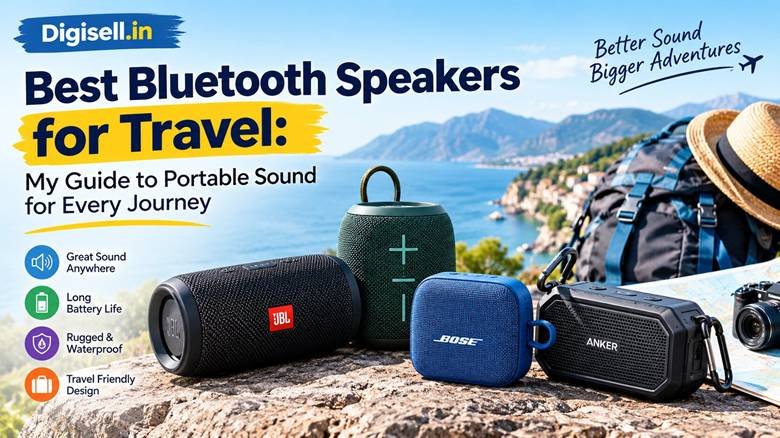
Travel is more enjoyable when you have your favorite music, podcasts, or audiobooks with you. Whether you are planning a weekend road trip, camping in the mountains, relaxing at a beach, or staying in a hotel, a portable Bluetooth speaker can make the experience more entertaining.
When choosing a travel speaker, I would focus on three essential things: portability, battery life, and sound quality. A speaker may sound fantastic at home, but if it is too heavy to carry or needs frequent charging, it may not be the best companion for a journey.
In this guide, I’ll explore the best Bluetooth speakers for travel, the features worth considering, and how to choose a model that suits your travel style and budget.
Why I Would Carry a Bluetooth Speaker While Traveling
For me, travel gadgets should be useful without adding unnecessary weight to my luggage. A compact Bluetooth speaker can provide entertainment in several situations.
- Road trips: Enjoy music during rest stops or at your accommodation.
- Camping: Listen to music around your campsite where permitted.
- Beach holidays: Play your favorite songs while relaxing in an appropriate area.
- Hotel stays: Listen to podcasts, audiobooks, or background music.
- Outdoor adventures: Enjoy audio during breaks on hikes or sightseeing trips.
- International travel: Connect your phone wirelessly without carrying extra cables for audio.
However, I would not bring a speaker on every journey. For a short business trip or minimalist backpacking adventure, headphones may be more practical.
Best Bluetooth Speakers for Travel: My Top Picks
The following speakers are worth considering because they offer different combinations of portability, durability, battery performance, and sound quality. These are recommendations based on their product characteristics, not a claim that I personally tested every model.
1. JBL Clip 5 — Best for Lightweight Travel
The JBL Clip 5 is designed for travelers who want a small speaker that is easy to attach to a backpack, travel bag, or suitable outdoor gear.
Why I would consider it:
- Integrated carabiner for convenient attachment.
- Compact design that takes up little luggage space.
- IP67 dustproof and waterproof rating.
- Bluetooth connectivity for compatible devices.
- Suitable for casual listening during day trips and outdoor breaks.
Potential drawback: Its small size limits the depth and room-filling power of its sound compared with larger speakers.
Best for: Solo travelers, hikers, cyclists, and backpackers who prioritize portability.
2. JBL Flip 7 — Best All-Round Travel Speaker
The JBL Flip series is popular among people looking for a balance between portable design and satisfying sound. The JBL Flip 7 is worth comparing if you want a speaker for hotel rooms, road trips, picnics, and outdoor relaxation.
Why I would consider it:
- Portable cylindrical design.
- More substantial sound than many ultra-compact speakers.
- IP68 dustproof and waterproof protection.
- Designed for wireless listening on the move.
- Convenient size for a travel backpack.
Potential drawback: It occupies more space than a clip-on mini speaker, and its price may be higher than basic portable alternatives.
Best for: Travelers who want one speaker for a wide variety of everyday situations.
3. Bose SoundLink Flex (2nd Gen) — Best for Balanced Sound
For travelers who care about audio quality as much as portability, the Bose SoundLink Flex (2nd Gen) is another model worth considering.
Why I would consider it:
- Compact construction suited to travel.
- Sound designed for clear, enjoyable everyday listening.
- Waterproof and dust-resistant IP67 rating.
- Utility loop for convenient carrying.
- Useful for music, podcasts, and relaxed listening at a hotel or holiday rental.
Potential drawback: It may cost more than entry-level speakers, so budget-conscious travelers should compare prices and features before buying.
Best for: Travelers who want a compact speaker with a focus on sound quality.
4. Ultimate Ears WONDERBOOM 4 — Best for Outdoor Adventures
The Ultimate Ears WONDERBOOM 4 is a compact, rounded speaker designed for portable listening and outdoor use.
Why I would consider it:
- IP67 dustproof and waterproof rating.
- Compact shape that fits easily into many bags.
- Designed for 360-degree sound.
- Outdoor listening mode.
- Suitable for camping, picnics, and casual group gatherings.
Potential drawback: Its rounded design may be less convenient to pack than a slim rectangular speaker.
Best for: Travelers who enjoy camping, picnics, and outdoor activities.
5. Anker Soundcore Select 4 Go — Best Budget-Friendly Option
Travelers who want a practical speaker without spending too much can consider the Anker Soundcore Select 4 Go.
Why I would consider it:
- Compact, lightweight design.
- IP67 dustproof and waterproof protection.
- Convenient for everyday travel and casual outdoor use.
- A budget-conscious alternative to premium brands.
- Suitable for podcasts and background music.
Potential drawback: Sound depth, maximum volume, and bass performance may not match more expensive models.
Best for: Students, budget travelers, and anyone who wants a simple portable speaker.
Availability, pricing, specifications, and included accessories can vary by region and retailer. Check the manufacturer’s current product listing before purchasing.
Quick Comparison: Which Travel Speaker Should You Choose?
| Bluetooth speaker | Best use | Main advantage | Main consideration |
| JBL Clip 5 | Backpacking | Compact clip-on design | Limited bass depth |
| JBL Flip 7 | General travel | Portability and sound balance | Larger than mini speakers |
| Bose SoundLink Flex (2nd Gen) | Music-focused trips | Audio-focused design | Premium pricing |
| Ultimate Ears WONDERBOOM 4 | Outdoor adventures | 360-degree sound | Rounded shape |
| Anker Soundcore Select 4 Go | Budget travel | Compact and practical | Less powerful than larger models |
What I Would Look for Before Buying a Travel Speaker
Choosing the right speaker is not just about selecting the most popular brand. I would compare the following features before making a purchase.
1. Weight and Size
When traveling, every extra item takes up space. A compact speaker is easier to carry on a flight, pack in a backpack, or keep in a day bag.
For solo trips, I would prioritize a lightweight model. For road trips and group holidays, a slightly larger speaker could be worthwhile if it delivers better sound.
2. Battery Life
Battery life is particularly important when traveling away from electrical outlets.
I would compare the manufacturer’s advertised playback time, while remembering that actual performance depends on volume, audio content, battery condition, and other factors.
For longer journeys, consider a speaker with enough battery capacity for your typical listening sessions. A USB-C charging connection can also be convenient when it matches your other travel equipment.
3. Water and Dust Resistance
Travel can expose electronics to rain, dust, sand, and accidental splashes. A speaker with an IP67 or IP68 rating can offer useful protection when used according to the manufacturer’s instructions.
Water resistance does not mean a speaker is indestructible. Saltwater, sand, impact, and improper charging can still cause problems. Rinse and dry the speaker as directed after exposure to water, and never charge it while wet.
4. Sound Quality and Bass
For background music in a hotel room, a small speaker may be sufficient. For outdoor listening, you may want a model that maintains clarity at higher volumes.
I would consider vocal clarity, bass response, distortion at higher volume, and how the speaker sounds at normal listening levels. Bigger speakers can sometimes deliver deeper bass, but the overall design matters more than size alone.
5. Bluetooth Connectivity
Reliable wireless connectivity helps reduce frustration when moving between devices or listening in unfamiliar places.
Before buying, check the supported Bluetooth version, pairing features, multipoint connectivity if needed, and compatibility with your phone or tablet. Newer Bluetooth versions do not automatically guarantee better sound quality.
6. Durability and Ease of Carrying
A sturdy body, convenient strap or carabiner, and easy-to-use controls can make a speaker more practical during travel.
I would also check whether the design is easy to clean, particularly if I planned to use it near dusty trails or sandy beaches.
Which Bluetooth Speaker Is Best for Different Types of Travel?
The best option depends on how you travel.
- For backpacking: I would start with the JBL Clip 5 because its compact design and integrated carabiner are practical when space is limited.
- For road trips: I would compare the JBL Flip 7 and Bose SoundLink Flex (2nd Gen) for a balance of portability and listening enjoyment.
- For camping: I would consider the Ultimate Ears WONDERBOOM 4 or another suitably durable, water-resistant model.
- For budget travel: I would compare the Anker Soundcore Select 4 Go with other affordable compact speakers.
- For hotel stays: I would prioritize clear sound at moderate volume, simple pairing, and a size that fits easily in my luggage.
Remember that personal listening preferences matter. A bass enthusiast may prefer a different speaker from someone who mainly listens to spoken-word content.
Practical Tips for Traveling With a Bluetooth Speaker
A few simple habits can help protect your speaker and make it more useful.
- Charge it before departure. Start your journey with a full battery.
- Pack it securely. Use a protective pouch if you have one, particularly when carrying other hard objects.
- Keep charging ports dry. Follow the manufacturer’s drying instructions after exposure to moisture.
- Check airline rules. If your speaker contains a lithium battery, follow the airline’s current requirements for electronic devices and battery-powered equipment.
- Use moderate volume. This can help conserve battery and avoid disturbing other travelers.
- Respect local rules. Some campsites, beaches, parks, hotels, and public transport services restrict loudspeaker use.
- Download offline entertainment. Save music or podcasts to your phone when possible, so you do not depend on mobile data.
Are Expensive Bluetooth Speakers Worth It for Travel?
Not always. A premium speaker may provide better sound, more advanced features, or a more refined design, but those advantages may not justify the additional cost for every traveler.
If I mainly wanted background music during occasional trips, a compact budget speaker could be sufficient. If I traveled frequently and listened to music every day, I would be more willing to invest in a better-performing model.
My approach would be to compare portability, real-world battery performance, durability, sound quality, warranty coverage, and price rather than choosing based on brand reputation alone.
Frequently Asked Questions
Which Bluetooth speaker is best for travel?
The JBL Clip 5 is a strong option for travelers who prioritize compact size. The JBL Flip 7 and Bose SoundLink Flex (2nd Gen) are worth comparing if you want a more substantial listening experience.
What size Bluetooth speaker should I carry while traveling?
For backpacking and short day trips, a small speaker is usually more convenient. For road trips and group holidays, a medium-sized speaker may offer a better balance between portability and sound.
Are waterproof Bluetooth speakers good for beach trips?
They can be useful, especially models with suitable water- and dust-resistance ratings. However, waterproof ratings do not eliminate the risks associated with saltwater, fine sand, or improper handling.
How long should a travel Bluetooth speaker battery last?
Choose a battery life that suits your itinerary. Longer advertised playback times can be helpful for camping and extended outdoor trips, but actual performance will vary with volume and usage.
Can I take a Bluetooth speaker on an airplane?
Many portable Bluetooth speakers can be carried on flights, but requirements can vary according to battery specifications, airline policies, and the country of travel. Check the airline’s current rules before departure.
Is a mini Bluetooth speaker powerful enough for outdoor use?
A mini speaker can be sufficient for personal listening or a small group nearby. For larger gatherings or noisy outdoor environments, a bigger model may be more suitable.
Final Verdict: My Recommendation for Travel
If portability is my biggest priority, I would start by comparing the JBL Clip 5 with other compact clip-on speakers. For a more versatile travel companion, I would look at the JBL Flip 7. For travelers who care about balanced sound, the Bose SoundLink Flex (2nd Gen) deserves consideration, while the Anker Soundcore Select 4 Go is worth exploring on a tighter budget.
Ultimately, the best Bluetooth speaker for travel is the one that fits your luggage, lasts long enough for your activities, and delivers the sound you enjoy without unnecessary weight or expense.
Before buying, compare current prices, specifications, verified customer reviews, and warranty terms. A little research can help you choose a speaker that adds enjoyment to your journeys for years to come.
Affiliate disclosure: DIGISELL.IN may earn a commission if you purchase through qualifying affiliate links, at no additional cost to you.
Editorial note: Product recommendations and specifications should be checked against current manufacturer information before publication. This article is for general product information and is not a report of firsthand product testing.
Best Bluetooth Speakers for Tailgating: 5 Portable Picks for Game Day
Introduction: Make Your Tailgate Sound Better
In the United States, tailgating is more than just gathering around a vehicle before a football game. It is about sharing food, enjoying your favorite team’s colors, catching up with friends, and building excitement before kickoff. Whether you’re heading to an NFL game, a college football matchup, or a weekend parking-lot party, good music can make the experience even better.
But choosing the right Bluetooth speaker for tailgating isn’t as simple as picking the loudest model. You need enough volume to handle outdoor noise, a battery that can last through the pregame festivities, a rugged design that can handle dust and accidental splashes, and a size that fits comfortably in your car or truck.
For this guide, I’ve approached the selection from a practical game-day perspective: what matters when packing your gear, setting up beside your vehicle, and keeping music playing throughout the day. The recommendations are based on product features and published review information rather than claims of personally testing every speaker.
Here are five Bluetooth speakers worth considering for your next tailgate.
1. JBL Charge 6 — Best Overall for Everyday Tailgating
The JBL Charge 6 is a strong all-around choice for people who want a portable speaker that balances sound, durability, and useful everyday features.
<Insert product image: JBL Charge 6 portable Bluetooth speaker>
One of the biggest advantages of a speaker this size is convenience. You can carry it from your vehicle to your tailgate setup without needing a separate speaker stand or a large storage space. It is particularly appealing for small groups who want background music during grilling, conversations, and pregame activities.
The Charge 6 also includes a built-in power-bank feature, which can be useful when your phone battery starts running low after taking photos, checking game updates, or coordinating with friends.
Key features
- Portable design for car, truck, and outdoor use.
- Rugged construction with IP68-rated dust and water protection.
- Manufacturer-rated battery life of up to 24 hours under specified conditions, with Playtime Boost potentially extending playback.
- Built-in phone-charging capability.
- Wireless connectivity and compatible multi-speaker pairing features.
Why I would consider it
For a typical tailgate with a few friends, I would prioritize a speaker that is easy to transport and doesn’t require constant attention. The Charge 6 fits that practical role well.
It may not deliver the same scale of sound as a large party speaker, particularly across a crowded parking lot. However, it is a sensible option if you also want a speaker for camping, backyard cookouts, road trips, and everyday listening.
Best for: Small-to-medium tailgate groups looking for a versatile, rugged speaker.
2. Ultimate Ears MEGABOOM 4 — Best for 360-Degree Sound
<Insert product image: Ultimate Ears MEGABOOM 4 Bluetooth speaker>
At a tailgate, people rarely sit in one position. Some gather around the grill, others stand near the open trunk, and a few may be sitting in folding chairs several feet away.
That is why the Ultimate Ears MEGABOOM 4 deserves consideration. Its cylindrical design produces 360-degree sound, helping distribute audio around the speaker rather than focusing it primarily in one direction.
Key features
- 360-degree sound distribution.
- IP67-rated dust and water protection.
- Manufacturer-rated battery life of up to 20 hours.
- Portable cylindrical design.
- PartyUp support for connecting compatible Ultimate Ears speakers.
Why I would consider it
If your group tends to move around during a tailgate, the MEGABOOM 4 offers a convenient alternative to a speaker that needs to face one particular seating area.
Its rugged construction is another advantage for outdoor gatherings. You still need to avoid unnecessary exposure to damaging conditions, but its dust and water resistance provide useful protection for a typical game-day environment.
The main consideration is scale. If you regularly host a large group and want powerful, bass-heavy music across a wide parking area, a bigger speaker may be more suitable.
Best for: Groups who want sound distributed around the gathering rather than directed toward one spot.
3. Soundcore Boom 2 Plus — Best for Bass and Outdoor Parties
<Insert product image: Soundcore Boom 2 Plus outdoor Bluetooth speaker>
For tailgaters who love energetic playlists, stadium anthems, hip-hop, rock, and bass-heavy music, the Soundcore Boom 2 Plus is worth a look.
This speaker is larger than compact everyday models, but that extra size is attractive when you want a more party-oriented listening experience. It is designed for outdoor entertainment, with powerful bass, a dedicated bass-enhancement feature, and a rugged portable build.
Key features
- Bass-focused sound with adjustable audio settings.
- IPX7-rated water resistance.
- Manufacturer-rated battery life of up to 20 hours under specified conditions.
- Built-in lighting effects.
- Support for compatible multi-speaker pairing.
- Larger enclosure intended for outdoor playback.
Why I would consider it
For a tailgate where music is part of the main attraction, bass performance matters. A speaker that sounds exciting at a moderate volume can help create a more lively atmosphere while friends prepare food or play games before kickoff.
The Boom 2 Plus is also a reasonable option for people who want one speaker for several purposes, including backyard parties, camping, and outdoor celebrations.
Keep in mind that battery life generally decreases when music is played loudly or lighting and bass-enhancement features are used heavily. The actual result will depend on your settings and environment.
Best for: Music-focused tailgates where strong bass and party features matter.
4. Bose SoundLink Max — Best Premium Portable Speaker
<Insert product image: Bose SoundLink Max portable Bluetooth speaker>
If sound quality is your priority and you are comfortable spending more, the Bose SoundLink Max is another option to consider.
Bose is known for its portable audio products, and the SoundLink Max combines a sturdy portable design with a sound profile intended to deliver substantial bass and clear music playback.
Key features
- Premium portable speaker design.
- IP67-rated dust and water protection.
- Manufacturer-rated battery life of up to 20 hours.
- Carrying handle for easier transportation.
- USB-C charging and phone-power features.
- Companion app support for sound adjustments.
Why I would consider it
A tailgate playlist may include everything from country music and classic rock to pop and modern hip-hop. A premium speaker can be appealing if you want to enjoy that variety with satisfying bass and detailed vocals.
The carrying handle is also useful when moving equipment between the parking lot, vehicle, and picnic area.
The trade-off is price. The SoundLink Max is a premium purchase, and its size and weight make it less convenient than smaller models. It is worth comparing against larger party-focused speakers if maximum volume is your main objective.
Best for: Buyers who value premium sound quality and durable construction.
5. Sony ULT FIELD 5 — Best for Bass-Heavy Game-Day Music
<Insert product image: Sony ULT FIELD 5 wireless Bluetooth speaker>
The Sony ULT FIELD 5 is another option for tailgaters who want an outdoor speaker with a strong emphasis on bass and party-friendly sound.
Its portable design and rugged construction make it suitable for people who want more substantial sound than a tiny travel speaker can provide.
Key features
- Bass-enhancement features from Sony’s ULT series.
- IP67-rated dust and water protection.
- Manufacturer-rated battery life of up to 25 hours, depending on conditions and settings.
- Portable design with a shoulder-strap option.
- Lighting effects and compatible party connectivity features.
Why I would consider it
If your tailgate playlist is built around energetic music, the ULT FIELD 5 offers features designed to make bass more prominent. That can work well for pregame celebrations and outdoor gatherings.
It is also versatile enough to consider for backyard parties and camping trips, so the purchase doesn’t need to be limited to football season.
However, its larger size and premium positioning may be unnecessary if you mainly want quiet background music while cooking. For smaller gatherings, a compact speaker may offer better value.
Best for: Tailgaters who enjoy bass-heavy playlists and want a more substantial outdoor speaker.
Quick Comparison: Which Tailgating Speaker Should You Choose?
| Bluetooth speaker | Best use | Main advantage | Main consideration |
| JBL Charge 6 | Everyday tailgating | Portability and phone charging | Not a large party speaker |
| Ultimate Ears MEGABOOM 4 | Groups gathered around the speaker | 360-degree sound | Less suited to very large gatherings |
| Soundcore Boom 2 Plus | Outdoor parties | Strong bass and party features | Larger to carry |
| Bose SoundLink Max | Premium listening | Refined sound and rugged build | Higher purchase cost |
| Sony ULT FIELD 5 | Bass-heavy playlists | Bass enhancement and outdoor versatility | Bulkier than compact options |
Features and battery estimates are based on manufacturer information; prices and availability can change. Check current specifications and independent reviews before purchasing.
How to Choose the Best Bluetooth Speaker for Tailgating
Before buying a speaker, consider how you actually spend game day. A compact speaker may be perfect for a couple of friends, while a larger party model may make more sense for a full truck-bed gathering.
1. Choose the right volume for your group
Outdoor spaces absorb sound differently from indoor rooms. Wind, traffic, conversations, and nearby tailgates can make music seem quieter than it does at home.
For a small group sitting near the speaker, a portable model such as the JBL Charge 6 or MEGABOOM 4 may be sufficient. For larger gatherings, consider a more powerful speaker designed for party use.
Remember that louder is not always better. Positioning the speaker well can improve how clearly people hear the music without unnecessarily increasing the volume.
2. Check battery life carefully
A football tailgate can start hours before kickoff. You may also want music after the game, particularly if you’re waiting for traffic to clear.
Look for a speaker with enough rated playback time to cover your plans. Treat advertised battery life as a maximum estimate rather than a guarantee: loud playback, cold weather, bass enhancement, and lighting can all reduce runtime.
Charge your speaker fully before leaving home, and consider carrying a power bank if your model supports convenient charging.
3. Look for water and dust protection
Parking lots can be dusty, drinks can spill, and the weather can change unexpectedly.
Check the speaker’s IP rating:
- IP67: Dust-tight and tested for immersion in water under specified conditions.
- IP68: Dust-tight and tested for immersion under the manufacturer’s specified conditions.
- IPX7: Tested for immersion in water under specified conditions, but the rating does not certify dust protection.
Water-resistant does not mean indestructible. Salt water, drinks, charging-port exposure, and damage to seals can still cause problems. Follow the manufacturer’s care instructions.
4. Consider portability and storage
A speaker that is easy to carry is more likely to get used beyond football season.
Think about your available trunk or truck-bed space, how far you need to walk from parking to your setup, and whether a handle or shoulder strap would help.
Compact speakers are convenient for spontaneous outings. Larger models can provide a fuller party experience but take up more room.
5. Decide whether you need extra features
Some tailgaters only need Bluetooth music. Others may benefit from features such as:
- A USB power bank for charging phones.
- Multi-speaker pairing for wider coverage.
- Customizable equalizer settings.
- Lighting effects for parties.
- A microphone input or built-in radio for announcements and game-day listening.
Don’t pay extra for features you won’t use. For most people, dependable connectivity, clear sound, suitable volume, and reliable battery performance matter most.
Tailgating Tips to Get More From Your Speaker
Even a good speaker can disappoint if it is placed poorly or used carelessly. These simple habits can make your setup more enjoyable.
Position the speaker thoughtfully. Keep it close enough to your group for clear listening, and avoid burying it among coolers, bags, or other equipment.
Protect it from direct exposure. Use a shaded, stable location and keep the speaker away from hot grills, grease, and places where drinks are likely to spill.
Prepare your playlist in advance. Download music for offline playback if your streaming service allows it. That way, unreliable parking-lot reception won’t interrupt your music.
Check stadium and venue rules. Some stadium parking lots restrict speaker size, amplified music, or certain types of equipment. Review the rules before leaving home.
Be considerate of neighboring tailgates. Keep the volume at a level that lets your group enjoy the music without overwhelming nearby fans. A great tailgate should add to the atmosphere, not create unnecessary conflict.
Secure your equipment. Place the speaker on a stable surface and avoid leaving it unattended in an open vehicle or truck bed.
Frequently Asked Questions
What is the best Bluetooth speaker for tailgating?
The JBL Charge 6 is a strong all-around option for people who value portability, durability, and phone charging. For a larger, bass-focused gathering, consider the Soundcore Boom 2 Plus or Sony ULT FIELD 5.
Are waterproof Bluetooth speakers worth buying for tailgating?
Yes, water and dust resistance can be useful around drinks, changing weather, and outdoor surfaces. Choose a model with an appropriate IP rating, but remember that water resistance does not protect against every kind of liquid exposure or physical damage.
How many hours of battery life do I need?
For a typical pregame gathering, look for enough rated playback time to cover setup, the pregame period, and any additional listening afterward. A speaker advertised for 20 hours or more provides a useful starting point, although actual playback time may be shorter at high volume.
Can a portable Bluetooth speaker be loud enough for a football tailgate?
Yes, a suitable portable speaker can provide enjoyable sound for a small or medium-sized group. Large gatherings with substantial crowd noise may benefit from a bigger party speaker designed to deliver higher output.
Is JBL or Bose better for tailgating?
JBL offers portable options with rugged construction and useful features, while Bose is attractive to buyers who prioritize premium sound quality. The better choice depends on the size of your gathering, budget, desired volume, and portability needs.
Can I use the same speaker for camping and tailgating?
Absolutely. Portable speakers with good battery life and suitable dust and water protection can work for camping, backyard parties, road trips, and tailgating. Check the product’s specifications and care instructions for your intended environment.
Final Verdict: The Best Tailgating Speaker for Your Game Day
The right speaker depends on how you celebrate.
- Best all-around choice: JBL Charge 6 for portability, durability, and practical features.
- Best for sound around the group: Ultimate Ears MEGABOOM 4.
- Best for bass and outdoor parties: Soundcore Boom 2 Plus.
- Best premium option: Bose SoundLink Max.
- Best for bass-focused game-day playlists: Sony ULT FIELD 5.
My practical recommendation is to start with the size of your usual tailgate group, then compare battery performance, ruggedness, and sound quality. A compact speaker is often the best investment for casual gatherings, while a larger party-focused model is more appropriate when music is central to the event.
Before making your final choice, compare current prices, warranties, return policies, and recent independent reviews. The best purchase is the one that fits your game-day routine and continues to be useful long after football season ends.
Affiliate disclosure: This article may contain affiliate links. If you purchase through qualifying links, we may earn a commission at no additional cost to you. Our recommendations are intended to help readers compare products and make informed purchasing decisions.
Prices, product features, and availability may change. Always verify the latest specifications with the manufacturer or retailer before purchasing.
Best Bluetooth Speakers for Poolside Use: 5 Waterproof Picks for Summer Fun
When summer arrives in the United States, spending an afternoon beside the swimming pool is one of my favorite ways to relax. Whether I’m imagining a weekend barbecue, a family pool party, or a quiet evening outdoors, good music can make the atmosphere feel more enjoyable. But choosing the right Bluetooth speaker for poolside use requires more than finding one with great sound.
A poolside speaker should deliver clear audio, handle splashes, offer dependable battery life, and be easy to carry outdoors. Ideally, it should also resist dust and accidental water exposure without requiring constant attention.
In this guide, I’ll explore five popular Bluetooth speakers worth considering for poolside entertainment, including options for different budgets, listening preferences, and outdoor activities.
What Makes a Good Poolside Bluetooth Speaker?
Before choosing a speaker, I would focus on five important features.
- Water resistance: Look for a clearly stated IP rating. IP67-rated speakers offer protection against dust and can withstand temporary immersion under specified test conditions.
- Sound quality: Music should remain clear enough to enjoy outdoors, even when people are talking or swimming.
- Battery life: A long-lasting battery is useful for pool parties that continue throughout the afternoon.
- Portability: Compact, lightweight designs are easier to move between the pool, patio, backyard, and beach.
- Durability: A sturdy exterior helps protect the speaker from everyday outdoor handling.
One important point: water-resistant does not mean completely waterproof under every condition. Pool chemicals, hot tubs, high-pressure water, and prolonged exposure can cause damage, so always follow the manufacturer’s instructions.
1. JBL Charge 6 — Best Overall Poolside Speaker
The JBL Charge series is worth considering for people who want a combination of powerful sound, portability, and outdoor-friendly construction.
The JBL Charge 6 is designed for listeners who want more substantial audio than a tiny portable speaker can provide. Its rugged construction and water- and dust-resistance features make it an appealing candidate for backyard gatherings and poolside playlists.
Why I’d consider it for poolside use:
- Powerful sound for outdoor listening.
- Rugged, portable design.
- IP68-rated water and dust resistance.
- Long advertised battery life, depending on playback conditions.
- A built-in power bank feature for charging compatible devices.
Potential drawback: It costs more than many compact Bluetooth speakers, and its larger size may be unnecessary for someone who only wants quiet background music.
My take: For a family that regularly hosts pool parties, the JBL Charge 6 is a strong all-around option to investigate.
2. JBL Flip 7 — Best Compact Speaker for Pool Parties
Sometimes, a smaller speaker is all that’s needed. The JBL Flip 7 is a portable option for people who want to carry their music around without bringing a bulky sound system.
Its compact cylindrical design makes it convenient for a poolside table, patio chair, or outdoor picnic. It is designed with IP68-rated protection against dust and water, although its specific usage limits still depend on the manufacturer’s guidance.
Why I’d consider it:
- Easy to carry around the backyard.
- Compact design for smaller outdoor spaces.
- IP68-rated dust and water resistance.
- Suitable for casual listening and smaller gatherings.
Potential drawback: A compact speaker may not deliver the same sense of scale as a larger model when a big group is spread across a wide backyard.
My take: The JBL Flip 7 is worth considering for couples, small families, and people who want one portable speaker for the pool, park, and vacation.
3. Ultimate Ears WONDERBOOM 4 — Best Small Speaker for Casual Poolside Listening
For someone who values portability and a simple outdoor listening experience, the Ultimate Ears WONDERBOOM 4 is another model to consider.
Its rounded shape and compact size make it convenient to move between outdoor spaces. The speaker is rated IP67 for dust and water resistance and is designed to float under the manufacturer’s specified conditions.
Why I’d consider it:
- Compact and easy to carry.
- IP67-rated water and dust protection.
- A floating design that can be useful around water.
- A practical size for smaller gatherings and casual music.
Potential drawback: Its small size limits how much bass and overall output it can deliver compared with larger portable speakers.
My take: If I wanted music for a small pool area without investing in a large speaker, this would be one of the models on my shortlist.
4. Bose SoundLink Flex (2nd Gen) — Best for Balanced Sound
Some listeners prefer natural-sounding vocals and detailed music instead of simply looking for maximum volume. For that kind of listening, the Bose SoundLink Flex (2nd Gen) deserves consideration.
Its compact build is designed for portability, while Bose’s audio tuning aims to provide balanced sound across different music styles. The speaker carries an IP67 rating for dust and water resistance.
Why I’d consider it:
- Clear, balanced audio for many music genres.
- Compact design for outdoor use.
- IP67-rated dust and water resistance.
- A useful option for music, podcasts, and relaxed afternoons by the pool.
Potential drawback: It may not be the best choice for someone who prioritizes the strongest bass or the loudest sound for a large pool party.
My take: I’d place this model on the shortlist for people who enjoy acoustic music, pop, podcasts, and relaxed background playlists.
5. JBL Go 4 — Best Budget-Friendly Compact Option
Not everyone needs a premium speaker for poolside music. The JBL Go 4 is a small, budget-oriented option designed for portability and everyday outdoor listening.
Its compact body makes it easy to pack for a weekend trip or keep in a beach bag. It has an IP67 rating for dust and water resistance, which is a useful feature for a speaker used around splashes.
Why I’d consider it:
- Small and lightweight design.
- IP67-rated dust and water resistance.
- Convenient for travel and personal listening.
- A more affordable category of speaker than many premium outdoor models.
Potential drawback: Its maximum output and bass response are more limited than those of larger speakers. Battery life is also shorter than that of several bigger models.
My take: The JBL Go 4 makes sense for someone who wants simple music by the pool without spending much on a premium audio product.
Quick Comparison: Which Speaker Should You Choose?
| Bluetooth Speaker | Best For | Water/Dust Rating | Main Advantage |
| JBL Charge 6 | Family pool parties | IP68 | Bigger sound and power-bank functionality |
| JBL Flip 7 | Everyday outdoor use | IP68 | Portable size and versatile sound |
| Ultimate Ears WONDERBOOM 4 | Casual poolside listening | IP67 | Compact design that floats |
| Bose SoundLink Flex (2nd Gen) | Balanced audio | IP67 | Detailed, enjoyable sound |
| JBL Go 4 | Budget-conscious buyers | IP67 | Very portable design |
Ratings and product features refer to the models listed above. Check the manufacturer’s current specifications and warranty terms before purchasing.
How I Would Choose the Right Poolside Speaker
If I were choosing a speaker for my own backyard, I would begin by thinking about how I planned to use it.
For a large pool party with several people talking and moving around, I’d lean toward the JBL Charge 6 because a larger speaker can be more suitable for filling an outdoor space with sound.
For regular family use, I’d compare the JBL Flip 7 with the Bose SoundLink Flex (2nd Gen). The choice would depend on whether portability, sound character, and the available price mattered most.
For a small pool area or occasional personal listening, the Ultimate Ears WONDERBOOM 4 or JBL Go 4 would be sensible options to investigate.
I would also check the current US price, customer reviews, battery specifications, and return policy before placing an order. Prices and availability can change, especially during summer sales and major shopping events.
Poolside Bluetooth Speaker Safety Tips
A little care can help protect your speaker and the people around it.
- Keep the speaker away from the pool’s edge whenever possible.
- Never handle charging cables or plugged-in equipment with wet hands.
- Follow the manufacturer’s instructions about charging after water exposure.
- Rinse off pool water only if the manufacturer permits it, and dry the speaker properly.
- Avoid leaving the speaker in direct sunlight or extreme heat for extended periods.
- Keep music at a reasonable volume so swimmers can hear important instructions and conversations.
- Never rely on a floating speaker as a pool-safety device.
Remember that even a speaker with a strong IP rating can be damaged by misuse, wear, or exposure outside its specified limits.
Frequently Asked Questions
What is the best Bluetooth speaker for poolside use?
The JBL Charge 6 is a strong option for people who want more powerful sound and outdoor versatility. The best choice depends on your budget, preferred sound, and the size of your pool area.
Are IP67 Bluetooth speakers safe to use near a swimming pool?
IP67-rated speakers are designed to resist dust and temporary immersion under specified laboratory conditions. However, that rating does not guarantee protection against every type of water exposure, pool chemicals, or long-term wear.
Which poolside Bluetooth speaker is best on a budget?
The JBL Go 4 is worth considering for buyers who want a compact speaker for personal listening and occasional outdoor use. Compare current US prices before making a final decision.
Can I leave a Bluetooth speaker beside the pool overnight?
I wouldn’t recommend leaving a portable speaker exposed overnight. Dew, unexpected rain, temperature changes, and accidental splashes can create risks even when the speaker has a water-resistance rating.
How loud should a poolside Bluetooth speaker be?
The right volume depends on the size of the area and the number of people present. For a small gathering, moderate volume is usually sufficient. Larger gatherings may benefit from a more powerful model, but the sound should remain comfortable and should not interfere with safety communication.
Final Thoughts
The best Bluetooth speaker for poolside use should make outdoor listening easy without adding unnecessary worry. A rugged, water-resistant design is important, but sound quality, battery life, portability, and price deserve equal attention.
For a larger backyard gathering, I’d investigate the JBL Charge 6. For a compact everyday option, the JBL Flip 7 is worth comparing. The Ultimate Ears WONDERBOOM 4 offers a distinctive floating design, the Bose SoundLink Flex (2nd Gen) appeals to listeners who value balanced sound, and the JBL Go 4 is a practical choice for a tighter budget.
Before buying, compare the latest specifications, current US prices, and warranty details. With the right speaker and sensible precautions, your poolside playlist can be ready for everything from a quiet afternoon to a lively summer gathering.
Affiliate disclosure: This article may contain affiliate links. If you purchase through qualifying links, DIGISELL.IN may earn a commission at no additional cost to you. Recommendations should be based on product features and suitability, not on the possibility of earning a commission.
Best Bluetooth Speakers for Picnics: My Guide to Portable Sound, Clear Music, and Outdoor Fun
A picnic is one of the simplest ways to enjoy a relaxing day outdoors. Whether I am planning a family outing, meeting friends in a park, enjoying a riverside lunch, or spending a sunny afternoon in the countryside, good music can make the occasion more enjoyable. However, choosing the right speaker is not always easy. A speaker that sounds impressive indoors may struggle with outdoor noise, limited battery life, or unexpected splashes of water.
In this guide, I explore the best Bluetooth speakers for picnics, focusing on portability, sound quality, battery performance, durability, and value for money. The goal is to help you choose a speaker that fits your picnic style without carrying unnecessary weight or spending more than you need to.
Disclosure: This is an editorial buying guide, not a report of personal hands-on testing. Product descriptions and specifications should be checked against current manufacturer information before purchasing.
What Makes a Bluetooth Speaker Ideal for a Picnic?
When choosing a portable speaker for an outdoor outing, I would prioritize practical features over impressive-looking specifications.
1. Lightweight and portable design
A picnic already involves carrying food, drinks, blankets, and other essentials. A compact speaker that fits easily into a backpack is more convenient than a large party speaker. Carrying straps, built-in loops, and clip-on designs can make transportation easier.
2. Reliable battery life
A good picnic speaker should last through lunch, outdoor games, conversations, and the journey home. Battery life varies with volume, audio content, connectivity, and battery condition, so I would choose a model with enough advertised playback time to provide a reasonable buffer.
3. Water and dust resistance
Grass can be damp, drinks can spill, and outdoor conditions can change unexpectedly. A speaker with an appropriate IP water- and dust-resistance rating provides additional peace of mind. Water resistance does not mean every speaker is suitable for submersion, and charging ports should be kept dry.
4. Clear sound outdoors
Open spaces do not provide the same acoustic support as rooms. For picnics, I would look for clear vocals, balanced music, and sufficient volume for a small group without forcing everyone to sit directly beside the speaker.
5. Easy Bluetooth connectivity
Simple pairing, stable wireless performance, and accessible controls are useful when several people want to share music. USB-C charging is another practical feature to consider.
5 Best Bluetooth Speakers for Picnics
The following models cover different picnic needs, from compact and lightweight designs to premium sound and longer outings.
1. JBL Clip 5 — Best for Lightweight Picnics
The JBL Clip 5 is worth considering when portability is the main priority. Its integrated carabiner makes it convenient to attach to a backpack, picnic bag, or suitable loop.
Why consider it?
- Compact design for easy carrying.
- Built-in carabiner for convenient attachment.
- IP67-rated dust and water resistance.
- Advertised battery life of up to 12 hours, with additional Playtime Boost available.
The Clip 5 is particularly suitable for solo outings, couples, and small picnics where convenience matters more than powerful bass. Its small size also makes it easier to pack when space is limited.
Potential drawback: It cannot deliver the same fullness or output as a larger speaker, particularly when playing music for a bigger group.
2. JBL Flip 7 — Best All-Round Picnic Option
The JBL Flip 7 is a strong candidate for people who want a balance between portability and more substantial sound. Its cylindrical design makes it easy to carry, while its rugged construction is intended for outdoor use.
Why consider it?
- Portable design suitable for backpacks.
- IP68-rated dust and water protection.
- Sound designed for music listening in different environments.
- A useful middle ground between miniature speakers and larger outdoor models.
For a picnic with family or friends, this type of speaker offers a practical balance. It is easier to transport than a large party speaker but offers more potential for filling a small outdoor gathering with music.
Potential drawback: It costs more than many basic compact speakers, so it may be unnecessary for someone who only wants quiet background music.
3. Ultimate Ears WONDERBOOM 4 — Best for Outdoor Group Listening
The Ultimate Ears WONDERBOOM 4 is an appealing option for picnickers who prefer a compact speaker with sound distributed around its body.
Why consider it?
- Compact, rounded design.
- 360-degree sound presentation.
- IP67-rated water and dust resistance.
- Advertised battery life of up to 14 hours.
- Outdoor Boost mode intended to help music carry in open environments.
Its rounded shape and portable build make it a natural candidate for a picnic blanket or outdoor table. The 360-degree presentation can also be useful when people are sitting around the speaker rather than facing one direction.
Potential drawback: It does not offer the deeper bass or output of a substantially larger speaker.
4. Bose SoundLink Flex (2nd Gen) — Best for Premium Sound
The Bose SoundLink Flex (2nd Gen) is worth considering if sound quality is more important than finding the cheapest option.
Why consider it?
- Compact design with flexible placement options.
- Sound intended to deliver a full listening experience from a relatively small enclosure.
- IP67-rated water and dust resistance.
- Advertised battery life of up to 12 hours.
- Convenient wireless connectivity.
For a relaxed picnic, acoustic music, podcasts, soft rock, and familiar playlists can benefit from a speaker that prioritizes balanced sound rather than simply maximum volume.
Potential drawback: Its premium pricing may be difficult to justify for occasional outdoor use, and battery life is shorter than that of some larger alternatives.
5. JBL Charge 6 — Best for Longer Picnics and Larger Groups
The JBL Charge 6 is a larger portable speaker for people who want stronger output and longer advertised battery life.
Why consider it?
- More substantial sound than miniature clip-on speakers.
- IP68-rated dust and water protection.
- Advertised playback of up to 28 hours, depending on usage and Playtime Boost settings.
- Built-in power-bank functionality for charging compatible devices.
- Suitable for longer outdoor gatherings where weight is less of a concern.
This model may be a better fit for a full-day picnic, a larger family gathering, or an outdoor lunch where music needs to remain audible across a wider area.
Potential drawback: It is bulkier and more expensive than the smaller speakers on this list. Its power-bank feature is useful, but charging another device will also draw on the speaker’s available battery.
Quick Comparison: Which Picnic Speaker Should You Choose?
| Speaker | Best suited for | Main advantage | Main trade-off |
| JBL Clip 5 | Solo outings and light packing | Compact clip-on design | Less powerful sound |
| JBL Flip 7 | Everyday picnics | Portability and durability | Mid-range pricing |
| WONDERBOOM 4 | Small groups | 360-degree sound | Limited deep bass |
| Bose SoundLink Flex (2nd Gen) | Relaxed music listening | Premium sound focus | Higher cost |
| JBL Charge 6 | Long outings and larger groups | Longer advertised battery life | More weight and bulk |
Specifications, availability, and prices can change. Check the current listing in your country before making a purchase.
How I Would Choose a Speaker for Different Picnic Situations
For a Couple’s Picnic
I would prioritize compact size, clear sound at low volume, and easy packing. The JBL Clip 5 is worth considering when minimal weight matters, while the Bose SoundLink Flex (2nd Gen) is a premium alternative for someone who places more importance on sound quality.
For a Family Picnic
A speaker with balanced sound, dependable battery life, and good resistance to dust and water is a sensible choice. The JBL Flip 7 offers a useful balance of portability and outdoor durability.
For a Picnic in a Large Park
If the group is spread across a larger blanket or seating area, a more substantial speaker may be preferable. The JBL Charge 6 is worth considering when you need stronger output and longer advertised playback.
Keep the volume considerate of nearby families, wildlife, and other park visitors.
For a Beachside Picnic
Sand, salt, and moisture create additional risks. I would choose a model with a suitable water- and dust-resistance rating, keep it away from direct contact with sand where possible, and follow the manufacturer’s cleaning instructions after use.
Even a waterproof speaker should not be treated as indestructible. Salt and grit can damage materials and interfere with buttons or charging connections over time.
7 Tips for Getting Better Sound During a Picnic
1. Charge the speaker before leaving. Do not rely on the remaining battery indicator from your previous outing.
2. Download music for offline listening. This reduces dependence on mobile coverage and helps avoid interruptions.
3. Position the speaker thoughtfully. A stable, dry surface is generally better than placing it directly on damp grass or loose sand.
4. Start with moderate volume. Increase it only when necessary. Higher volume can consume more battery and make distortion more noticeable.
5. Keep drinks away from charging ports. Water resistance is not a guarantee against damage from every spill.
6. Carry a suitable charging cable. This is especially useful for longer trips, provided you have a safe way to recharge the speaker.
7. Respect the surroundings. Keep music at a reasonable level, follow park rules, and avoid disturbing wildlife or other visitors.
Are Expensive Bluetooth Speakers Worth It for Picnics?
Not always. A premium speaker may provide fuller sound, more robust construction, or additional features, but a smaller model may be perfectly adequate for quiet background music.
I would think about three questions before spending more:
- How many people will usually listen?
- Will the speaker be used for a few hours or an entire day?
- Is sound quality, portability, durability, or price the most important factor?
For occasional picnics, a compact speaker can offer excellent convenience. For frequent outdoor gatherings, investing in better sound, suitable weather protection, and longer battery life may be worthwhile.
Final Verdict: The Best Bluetooth Speaker for Your Picnic
The best Bluetooth speaker for a picnic depends on how you plan to use it.
- Best for portability: JBL Clip 5.
- Best all-round choice: JBL Flip 7.
- Best for group listening: Ultimate Ears WONDERBOOM 4.
- Best premium option: Bose SoundLink Flex (2nd Gen).
- Best for longer outings: JBL Charge 6.
If I were narrowing the list for a typical picnic, I would start by comparing the JBL Flip 7 and Ultimate Ears WONDERBOOM 4. Both are portable options with outdoor-friendly protection, but their sound presentation, dimensions, prices, and controls differ.
Before buying, compare current prices, warranty terms, verified customer reviews, and the exact specifications of the model available in your market.
Ultimately, a picnic speaker should make an enjoyable day easier, not add unnecessary weight or expense. Choose one that fits your group, your budget, and your outdoor routine, and let the music complement the experience rather than dominate it.
Frequently Asked Questions
1. What is the best Bluetooth speaker for picnics?
The best choice depends on your needs. The JBL Clip 5 is worth considering for portability, the JBL Flip 7 for a balance of features, and the JBL Charge 6 for longer outings and stronger sound.
2. Should I buy a waterproof Bluetooth speaker for picnics?
Water resistance is useful because outdoor surfaces may be damp and drinks can spill. Look for a suitable IP rating and follow the manufacturer’s limitations for water exposure.
3. How much battery life do I need for a picnic?
For a short outing, several hours of playback may be sufficient. For a full-day picnic, look for a model with a longer advertised battery life and allow for reduced runtime at higher volume.
4. Is a small Bluetooth speaker loud enough for a family picnic?
A compact speaker can work well for a small group sitting nearby. Larger groups or noisy environments may benefit from a more powerful model.
5. Can I use a Bluetooth speaker at the beach?
Yes, if the model is appropriate for the conditions and local rules allow it. Keep it away from direct sand exposure, saltwater, and charging while wet. Follow the manufacturer’s care instructions.
6. What should I check before purchasing a picnic speaker?
Compare portability, sound quality, battery life, IP rating, Bluetooth connectivity, charging method, warranty, price, and recent customer feedback.
Affiliate note: If this article contains affiliate links, the website may earn a commission from qualifying purchases at no additional cost to the reader. Include this disclosure only when it accurately reflects your site’s arrangements.
Best Bluetooth Speakers for Home: My Complete Buying Guide for 2026
Choosing the best Bluetooth speaker for home is not just about finding a speaker that plays music loudly. I want a speaker that fits naturally into my daily routine, sounds enjoyable at different volume levels, looks good in my room, and connects easily to my phone, laptop, or tablet.
Whether you enjoy relaxing with music in the bedroom, listening to podcasts while cooking, watching movies in the living room, or playing your favorite songs during a weekend get-together, the right Bluetooth speaker can make everyday listening more enjoyable.
In this guide, I explore some of the best Bluetooth speakers for home use in 2026, compare their main features, and explain which type of listener each model suits best. My goal is to help you choose a speaker that offers the right balance of sound quality, convenience, design, and value.
Why I Would Choose a Bluetooth Speaker for Home
One thing I appreciate about the idea of a Bluetooth speaker is its flexibility. Unlike a traditional wired sound system, a Bluetooth speaker can connect directly to a compatible device without requiring a complicated setup.
When choosing a speaker for everyday home use, I would focus on three things: how it sounds at normal listening volume, how easily I can control it, and whether it suits the room where I plan to use it.
For example, a compact speaker may be ideal for a bedroom or home office, while a more powerful model may be a better choice for a large living room. A speaker with Wi-Fi support can also be useful if I want additional streaming options beyond Bluetooth.
Best Bluetooth Speakers for Home at a Glance
Here are my shortlisted options for different home-listening needs.
| Bluetooth speaker | Best suited for | Main advantage |
| JBL Authentics 300 | Living rooms and flexible home listening | Retro design, substantial output, and built-in battery |
| Sonos Era 100 | Bedrooms, offices, and everyday music | Compact design with Bluetooth and Wi-Fi |
| JBL Authentics 200 | Style-conscious home listeners | Classic appearance and smart-speaker features |
| JBL Authentics 500 | Larger rooms and immersive listening | More powerful home audio system |
These are recommendations based on product features and intended use, not a claim that I personally tested every model. Availability, specifications, and prices can change, so check the current listing before purchasing.
1. JBL Authentics 300 — Best Overall for Flexible Home Listening
The JBL Authentics 300 would be one of my first options to consider if I wanted a speaker that combined distinctive design with flexible placement around the home.
What attracts me to this model is its retro-inspired appearance. The grille, leather-like finish, and metal handle give it a different look from many conventional wireless speakers. It could fit nicely on a living-room shelf, a side table, or a kitchen counter.
Features I would look for
- 100W maximum speaker power output, according to JBL’s specifications.
- Bluetooth 5.3 and built-in Wi-Fi.
- A 5.25-inch woofer and two tweeters.
- A rechargeable battery rated for up to eight hours of playback, depending on volume and audio content.
- Compatible voice-assistant features, subject to regional availability.
Why I would consider it
I like the idea of a home speaker that does not need to remain in one place all day. With its built-in battery and carrying handle, the Authentics 300 can be moved between rooms more easily than a speaker that must always be connected to a power outlet.
Its Wi-Fi connectivity is another advantage for people who want more than basic Bluetooth streaming.
What I would consider before buying
This is not the smallest or lightest option. At approximately 10.8 pounds, it is portable around the home but not as convenient as a pocket-sized speaker. Its premium features may also be unnecessary if I only want background music in a small bedroom.
My verdict: I would shortlist the JBL Authentics 300 for someone who wants a stylish, feature-rich speaker that can serve as a central music source at home.
2. Sonos Era 100 — Best for Bedrooms and Everyday Listening
The Sonos Era 100 is another option I would consider for a bedroom, study, or smaller living room.
Its compact design makes it suitable for a bookshelf, desk, bedside table, or kitchen counter. Sonos provides both Bluetooth and Wi-Fi connectivity, giving listeners different ways to play audio.
Features worth considering
- Bluetooth 5.3.
- Wi-Fi connectivity.
- Stereo sound from a compact speaker design.
- Apple AirPlay 2 support.
- Voice-control options, with availability depending on the service and region.
- Optional line-in connectivity through compatible accessories.
Why it stands out to me
For everyday home listening, I would value a speaker that can remain in one convenient location and work with different listening habits. Bluetooth is useful when I want to play audio directly from a phone, while Wi-Fi can be useful for supported streaming services and compatible home audio setups.
I would also consider the Era 100 if I wanted the option to expand into a multiroom Sonos system later.
What to keep in mind
Unlike a battery-powered portable speaker, the Era 100 requires a nearby electrical outlet. Some wired audio connections require additional accessories, and the full feature set depends on the app, network, and services used.
My verdict: The Sonos Era 100 is worth considering if I want a compact, primarily stationary speaker for regular listening at home.
3. JBL Authentics 200 — Best for Stylish Home Audio
The JBL Authentics 200 belongs on the shortlist for anyone who likes the classic look of vintage audio equipment but wants modern wireless features.
It shares the Authentics design approach, making it a potential match for a living room, reading corner, or home office where the speaker is also part of the decor.
What appeals to me
- A distinctive retro-inspired design.
- Wireless music playback and smart-home-oriented features.
- A home-focused speaker format.
- A design that can complement traditional or modern interiors.
The Authentics family offers Bluetooth and Wi-Fi features, app-based controls, and voice-assistant functionality on supported models. I would check the specifications of the exact Authentics 200 listing before buying to confirm its included features and connectivity options.
Who should consider it?
I would look at this model if appearance matters almost as much as audio functionality. It is especially worth comparing with the Authentics 300 if I do not need the latter’s built-in battery.
My verdict: A promising option for home listeners who want their speaker to look like a considered part of their interior rather than just another electronic device.
4. JBL Authentics 500 — Best for Larger Rooms
For a larger living room or a listener who wants a more substantial home audio setup, I would also investigate the JBL Authentics range, particularly the Authentics 500.
The Authentics 500 is the more powerful home-focused model in the range. JBL lists a 270W amplifier configuration, a dedicated down-firing subwoofer, and Dolby Atmos support for this model.
Why I would consider it
A larger speaker system can be more appropriate when I want music to fill a spacious room or when I regularly listen to full arrangements with prominent bass and instruments.
The Authentics 500 may be appealing if I prioritize a substantial home audio experience over portability.
What I would check first
This is a more serious investment than a compact Bluetooth speaker. I would compare its price, physical dimensions, connection options, and placement requirements against my actual room and listening habits.
I would also remember that a higher power rating does not automatically mean better sound for every listener or every room.
My verdict: A model worth investigating for listeners who prioritize a more substantial home speaker and do not need battery-powered portability.
What I Would Look for Before Buying a Bluetooth Speaker
After narrowing down the options, I would use the following checklist to avoid paying for features I may never use.
1. Sound quality at normal volume
I would not choose a speaker based on maximum loudness alone. Most home listening happens at moderate volume, so clarity matters.
I would look for clear vocals, balanced instruments, and bass that suits my preferred music. If possible, I would listen to familiar songs before making a final decision.
2. Speaker size and room placement
A small speaker can be convenient for a bedroom or desk, while a larger model may make more sense for a spacious living room.
I would also think about where the speaker will sit. A bookshelf, countertop, and open side table can produce different listening experiences because of their surroundings.
3. Bluetooth versus Wi-Fi
Bluetooth is convenient because I can usually play audio directly from a compatible phone, tablet, or computer.
Wi-Fi can add options for supported streaming services, multiroom audio, and home-network playback. However, Wi-Fi features are not essential for everyone.
If I mainly play downloaded music or stream from my phone, Bluetooth alone may be enough.
4. Battery life
If I plan to move my speaker from the living room to the kitchen or bedroom, a built-in battery can be useful.
If the speaker will stay in one place, a mains-powered model may be more practical. I would check the manufacturer’s battery estimate and remember that actual playback time varies with volume and content.
5. Controls and app support
I would prefer straightforward volume and playback controls. An accompanying app can be useful for equalizer adjustments, software updates, and managing supported streaming features.
Before buying, I would confirm that the app and any voice-assistant features work in my region.
6. Price and long-term value
I would compare the current price with the features I actually need rather than automatically choosing the most expensive option.
A compact speaker can be the better value for casual listening, while a more advanced model may justify its cost if I will use its additional features regularly.
How I Would Set Up a Bluetooth Speaker at Home
Even a good speaker needs sensible placement to perform well.
First, I would put it on a stable surface with enough space around it for its design to work as intended. I would avoid blocking the speaker grille or placing it somewhere that makes the controls difficult to reach.
Next, I would connect my phone and play a familiar track at a comfortable volume. I would listen for clear vocals, balanced instruments, and bass that does not overwhelm the rest of the music.
I would then adjust the speaker’s position if needed. Moving it away from a corner or an enclosed shelf may help if the bass sounds overly strong or the audio seems muffled.
Finally, I would check the connection stability and app settings. If the speaker supports Wi-Fi and I plan to use those features, I would complete the setup before relying on them for daily listening.
These are the setup steps I would follow; they are not claims of a completed hands-on test of the products listed above.
Common Mistakes I Would Avoid
Buying based only on wattage: Output power is only one specification. Design, tuning, room acoustics, and listening preferences also matter.
Ignoring connectivity: A speaker that lacks a connection you need may become inconvenient, even if its sound quality is good.
Choosing a portable speaker when I need a permanent system: Battery-powered flexibility is useful, but a stationary home speaker may suit some rooms better.
Expecting every speaker to fill a large room: Compact models have physical limitations. For larger spaces, I would compare larger speakers or a suitable stereo setup.
Ignoring the return policy: If buying online, I would check the seller’s return conditions, warranty coverage, and whether the product is new or refurbished.
Frequently Asked Questions
What is the best Bluetooth speaker for home use?
My first shortlist would include the JBL Authentics 300 for flexible home listening, the Sonos Era 100 for a compact stationary setup, and the JBL Authentics 500 for listeners considering a more powerful home audio system. The best choice depends on your budget, room size, and desired features.
Is a Bluetooth speaker good enough for a living room?
Yes. A suitable Bluetooth speaker can work very well for everyday music, podcasts, and casual entertainment in a living room. Larger rooms or more demanding listening needs may benefit from a bigger speaker or a stereo setup.
Should I buy a Bluetooth speaker with Wi-Fi?
I would choose Wi-Fi if I wanted supported network streaming, multiroom features, or additional smart-home capabilities. If I only need to play audio from my phone, Bluetooth may be sufficient.
Are expensive Bluetooth speakers worth it?
They can be, depending on what the additional cost provides. Better connectivity, more substantial hardware, useful software features, and a design that suits your needs may justify the price. I would compare these benefits with how I actually listen to music.
Can I use a Bluetooth speaker with my television?
Sometimes. Compatibility depends on the television and speaker. Before purchasing, I would check supported Bluetooth audio connections, potential audio delay, and whether the speaker offers a suitable alternative connection.
Final Thoughts: Which Bluetooth Speaker Would I Choose?
If I were choosing a Bluetooth speaker for my home, I would start by deciding where I planned to use it and how I usually listened to music.
For a flexible, design-focused speaker, I would compare the JBL Authentics 300 with other premium options. For a compact speaker that can form part of a connected home audio system, I would consider the Sonos Era 100. If I wanted a more powerful home-focused setup, I would investigate the JBL Authentics 500.
I would then compare current prices, warranty coverage, connectivity, and return policies before placing an order.
Ultimately, the best Bluetooth speaker for home is not necessarily the most expensive or the loudest one. It is the speaker that fits your room, your listening habits, and your budget while making it easy to enjoy music every day.
My recommendation: Compare the JBL Authentics 300 and Sonos Era 100 first if you are looking for a premium everyday home speaker, then consider larger models if your room or listening preferences demand more.
Affiliate disclosure: This article may contain affiliate links. If you purchase through qualifying links, we may earn a commission at no additional cost to you. Our recommendations should be based on product features, suitability, and value.
Best Bluetooth Speakers for Hiking: 5 Portable Picks for Your Next Adventure
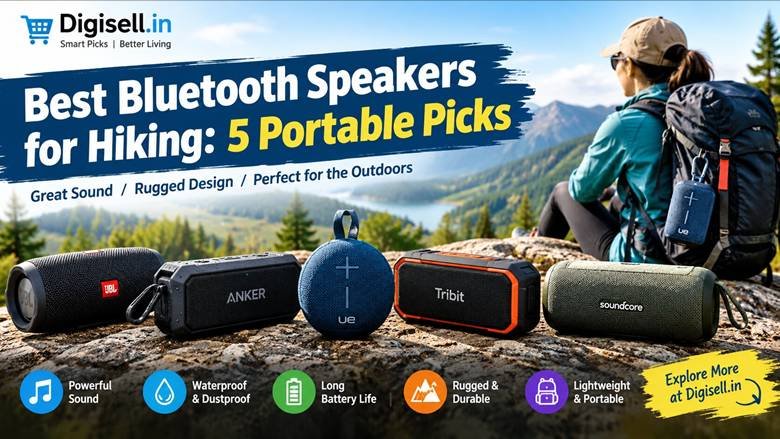
Hiking is one of the best ways to enjoy the outdoors, clear your mind, and explore beautiful trails. Whether you are walking through a national forest, climbing a mountain trail, or spending a weekend camping in the wilderness, the right Bluetooth speaker can add a little extra enjoyment to your adventure.
When choosing a speaker for hiking, I would focus on more than sound quality alone. A speaker should be lightweight, durable, easy to attach to a backpack, resistant to dust and water, and capable of playing music for several hours without needing a recharge.
For this guide, I compared the features, portability, durability, and practical advantages of popular portable speakers to identify five options worth considering for hiking in the United States.
If you are planning a trip to the Smoky Mountains, Yosemite, the Appalachian Trail, or your favorite local hiking path, this guide will help you find a suitable speaker for your outdoor adventures.
What Makes a Bluetooth Speaker Good for Hiking?
Before selecting a speaker, I consider five important factors.
1. Lightweight design: Every extra ounce matters when carrying a backpack for several hours. A compact speaker is easier to carry than a large outdoor model.
2. Water and dust resistance: Hiking can expose electronics to rain, mud, sweat, and dust. An IP67-rated speaker, for example, is designed to resist dust and withstand specified temporary immersion in water under laboratory conditions.
3. Battery life: A speaker with a longer advertised battery life is useful for day hikes and camping trips. Remember that actual playback time depends on volume, audio content, temperature, and battery condition.
4. Easy attachment: An integrated carabiner, carrying loop, or strap makes it easier to secure a speaker to a backpack.
5. Clear sound: You do not necessarily need powerful bass on a hiking trail. Clear vocals, balanced music, and sufficient volume for your immediate group are often more useful.
5 Best Bluetooth Speakers for Hiking
1. JBL Clip 5 — Best Overall for Backpack Portability
The JBL Clip 5 is my first choice to consider for hikers who want a compact speaker that attaches directly to a backpack.
Its built-in carabiner makes it convenient to carry without taking up much room inside a bag. The speaker has an IP67 dustproof and waterproof rating and offers up to 12 hours of advertised playtime, with JBL’s Playtime Boost feature adding up to three hours under suitable conditions.
Why I like its hiking-friendly design:
- Integrated carabiner for attaching to a backpack.
- Compact construction for everyday outdoor use.
- IP67-rated dust and water protection.
- Up to 12 hours of advertised playback, plus Playtime Boost.
- Companion app with sound customization options.
Potential drawback: Its small size limits deep bass and the fullness of the sound compared with larger speakers. It is better suited to personal listening or a small group during a break than filling a large campsite with sound.
Best for: Day hikers, backpackers, casual trail walkers, and travelers who value convenience.
My take: If I wanted one speaker that could stay clipped to my hiking bag, the JBL Clip 5 would be near the top of my shortlist.
Product details: https://www.jbl.com/
2. Ultimate Ears WONDERBOOM 4 — Best for 360-Degree Sound
The Ultimate Ears WONDERBOOM 4 is worth considering if you prefer sound that spreads around a resting spot instead of being directed mainly toward one side.
Its compact, rounded design, IP67 rating, and advertised battery life of up to 14 hours make it an appealing option for outdoor recreation. Its 360-degree sound presentation is particularly useful when several people are gathered around a picnic area or campsite.
Key features:
- 360-degree sound.
- IP67 dust and water resistance.
- Up to 14 hours of advertised battery life.
- Compact shape for carrying in a backpack.
- Outdoor-focused sound mode.
Potential drawback: It does not have the same integrated carabiner convenience as the JBL Clip 5. You may need to carry it inside your backpack or secure it in a suitable pocket.
Best for: Friends hiking together, campsite breaks, and outdoor picnics.
My take: I would consider this model when sound coverage matters more than attaching the speaker directly to a backpack strap.
3. JBL Go 4 — Best Compact Budget Option
If you want a small Bluetooth speaker without spending too much, the JBL Go 4 deserves consideration.
Its compact, rectangular body is easy to pack, and its IP67 rating makes it suitable for outdoor activities where dust and splashes are concerns. JBL advertises up to seven hours of playback, with Playtime Boost potentially adding two more hours.
Key features:
- Small, portable design.
- IP67 dustproof and waterproof rating.
- Up to seven hours of advertised playback, plus Playtime Boost.
- Built-in carrying loop.
- JBL Portable app support.
Potential drawback: The shorter advertised battery life makes it less suitable for extended trips without access to charging. Its compact speaker drivers also limit bass and maximum output.
Best for: Short hikes, casual trail walks, day trips, and budget-conscious buyers.
My take: For someone who wants a small speaker for occasional hikes rather than an expensive outdoor audio setup, the JBL Go 4 is a sensible option to compare.
4. Bose SoundLink Micro — Best for Compact Premium Listening
The Bose SoundLink Micro is another option for hikers who value a compact speaker and enjoyable sound in a small package.
Its small body and rear strap make it convenient to secure to suitable bags or equipment. It is designed for portable outdoor use and has an IP67 rating on the original model.
Key features:
- Compact design for easy transportation.
- Flexible rear strap for attachment.
- IP67 dust and water protection on the original model.
- Sound designed for a small portable speaker.
- Convenient Bluetooth connectivity.
Potential drawback: Its small enclosure cannot reproduce the deep bass or room-filling sound of larger speakers. Battery performance and features vary by generation, so check the exact version before purchasing.
Best for: Hikers who prefer a compact speaker from a premium audio brand.
My take: I would compare the Bose SoundLink Micro with the JBL Clip 5 before buying. The JBL’s integrated carabiner is especially convenient for backpack attachment, while the Bose is worth considering if its design and sound appeal more to you.
5. JBL Charge 6 — Best for Longer Outdoor Trips
For hikers who also camp regularly, spend time at established campsites, or want more powerful sound during breaks, the JBL Charge 6 offers a different approach.
It is larger and heavier than the miniature options above, but that trade-off brings a more substantial speaker design. It is designed for outdoor use, features IP68-rated protection, and offers up to 24 hours of advertised playback, with Playtime Boost potentially extending playback further.
Key features:
- More substantial sound than many ultra-compact speakers.
- IP68 dust and water protection.
- Up to 24 hours of advertised battery life, depending on settings.
- Portable design suited to camping and outdoor gatherings.
- USB-C connectivity.
Potential drawback: It takes up more backpack space and adds more weight. For a strenuous hike where every ounce matters, a smaller model is usually the better choice.
Best for: Car campers, established campsite users, and hikers who prioritize longer playback and fuller sound.
My take: I would choose the Charge 6 for trips where music at the campsite matters as much as portability on the trail. It would not be my first choice for ultralight backpacking.
Quick Comparison: Which Hiking Speaker Should You Choose?
| Speaker | Main advantage | Best use |
| JBL Clip 5 | Integrated carabiner | Backpack portability |
| Ultimate Ears WONDERBOOM 4 | 360-degree sound | Group breaks and campsites |
| JBL Go 4 | Compact size | Short hikes and budgets |
| Bose SoundLink Micro | Compact premium option | Casual outdoor listening |
| JBL Charge 6 | Fuller sound and longer advertised playback | Camping and extended outings |
Battery-life figures are manufacturer claims rather than guaranteed real-world results. Prices and availability may change, so check current US retailer listings before purchasing.
How I Would Choose the Right Speaker for a Hiking Trip
I would start by thinking about the type of hike I normally take.
For a short morning hike: A compact speaker such as the JBL Go 4 may be enough. It is easy to pack and does not require carrying a larger audio device.
For a full-day hike: I would lean toward the JBL Clip 5 because its carabiner makes carrying convenient and its advertised battery life is longer than that of the Go 4.
For a group outing: The Ultimate Ears WONDERBOOM 4 is worth considering for its 360-degree sound.
For hiking followed by camping: The JBL Charge 6 may make more sense if I have room for a larger speaker and want fuller sound at the campsite.
For a premium compact option: I would compare the Bose SoundLink Micro against the JBL Clip 5 based on attachment style, price, and the sound profile I prefer.
Important Hiking Tips for Using a Bluetooth Speaker
A good hiking speaker should enhance an outdoor experience without disturbing other people or wildlife.
- Respect trail etiquette: Keep music low enough that nearby hikers do not have to listen to it. Headphones are often the better choice on busy or quiet trails.
- Check local regulations: Some parks and protected areas restrict amplified sound. Follow posted rules and ranger guidance.
- Secure the speaker: Attach it firmly to your backpack to reduce the risk of dropping or losing it.
- Download music offline: Mobile coverage can be unreliable in remote forests and mountain areas. Save playlists or podcasts to your phone before leaving.
- Protect your battery: Cold weather can affect battery performance. Keep your electronics protected from extreme temperatures.
- Do not rely on a waterproof rating alone: Avoid unnecessary water exposure, inspect charging ports, and follow the manufacturer’s care instructions.
- Keep the volume sensible: Loud music can interfere with your awareness of other trail users, wildlife, and environmental sounds.
Frequently Asked Questions
What is the best Bluetooth speaker for hiking?
The JBL Clip 5 is my leading recommendation for hikers who want an easy-to-carry speaker with an integrated carabiner, IP67 protection, and up to 12 hours of advertised battery life.
Are Bluetooth speakers waterproof enough for hiking?
Some are designed for demanding outdoor conditions. Look for an appropriate IP rating, such as IP67 or IP68, and check the manufacturer’s specific water-resistance instructions. No rating makes a speaker indestructible.
What is the lightest type of Bluetooth speaker for hiking?
Small models such as the JBL Go 4 and JBL Clip 5 are designed for portability. Check the manufacturer’s current specifications for exact weight, because even small differences can matter on long backpacking trips.
Is a Bluetooth speaker better than headphones for hiking?
It depends on the situation. A speaker can be convenient during a permitted campsite break or a private outdoor gathering. Headphones may be more considerate on shared trails, while open-ear listening or keeping one ear unobstructed can help maintain awareness when appropriate.
How much should I spend on a hiking speaker?
You do not necessarily need a premium model. A compact budget speaker can be enough for short walks, while hikers who regularly camp or take longer trips may benefit from investing in better durability, battery capacity, or sound quality. Compare current prices and warranty coverage before deciding.
Final Verdict: Which Hiking Bluetooth Speaker Is Worth Buying?
After comparing these options for portability, durability, battery life, and intended use, I would start with the JBL Clip 5 for most casual hikers. Its integrated carabiner is a practical advantage, and its advertised battery life and IP67 rating suit many day-hiking situations.
The JBL Go 4 is worth considering if compact size and budget are your priorities. The Ultimate Ears WONDERBOOM 4 is attractive for group listening, while the Bose SoundLink Micro offers another compact option to compare. If you want more substantial sound for camping, the JBL Charge 6 is the better fit for that use case.
Ultimately, the best Bluetooth speaker for hiking is not necessarily the loudest or most expensive. It is the one that fits your backpack, lasts through your outing, handles the conditions you expect, and lets you enjoy music without compromising trail safety or disturbing others.
My recommendation: For a practical balance of portability and outdoor-ready features, begin by comparing the JBL Clip 5 with the JBL Go 4. Choose the smaller model for simple, occasional use or the clip-on model if convenient backpack attachment is a priority.
Affiliate disclosure: This article may contain affiliate links. If you purchase through qualifying links, the website may earn a commission at no additional cost to you. Recommendations should be based on product suitability, not commission rates.
Best Bluetooth Speakers for Garage: 5 Picks for Music, DIY Projects, and Workouts
A garage can be more than a place to park a car or store tools. For many American homeowners, it is a weekend workshop, a home gym, a DIY project space, or a comfortable place to relax while listening to favorite music. The right Bluetooth speaker can make all these activities more enjoyable.
When choosing a Bluetooth speaker for a garage, I would look beyond sound quality alone. Garage environments can be dusty, tools can create background noise, and the temperature may change considerably throughout the year. A speaker that sounds great in a quiet bedroom may not be the best choice for a busy workshop.
In this guide, I compare five Bluetooth speakers worth considering for different garage setups, from compact everyday listening to powerful music for larger spaces. The recommendations focus on practical features, durability, portability, and value rather than simply choosing the most expensive model.
Quick answer: The JBL Charge 6 is a strong all-around option for everyday garage listening, while the Anker Soundcore Boom 2 is worth considering if you want bigger sound and stronger bass for the money. For a tool-focused garage, a DEWALT jobsite speaker may be a better fit.
Note: This is an experience-style buying guide based on product specifications and published reviews, not a claim that I personally tested every speaker in a garage.
What I Look for in a Garage Bluetooth Speaker
Before spending money, I consider how the speaker will be used. A person restoring a classic car, a homeowner building shelves, and someone lifting weights in a garage gym may need different features.
1. Sound that stays clear
Garage doors, air compressors, fans, and power tools can make listening difficult. I would prioritize a speaker with clear vocals and enough volume for the size of the space. Deep bass is enjoyable, but it should not overpower podcasts, audiobooks, or spoken instructions.
2. Dust and water resistance
Dust is one of the biggest considerations in a workshop. Sawdust, dirt, and metal particles can accumulate around equipment, so I would favor a rugged speaker with an appropriate dust-resistance rating.
An IPX7 rating indicates water protection but does not establish a dust-resistance rating. If dust protection matters, look for an IP rating that specifically includes dust protection, such as IP67 or IP68.
3. Battery life or convenient power
A rechargeable speaker is useful when moving between the garage, driveway, backyard, and workshop. If the speaker will stay in one place, a plug-in model may be more convenient because you will not need to recharge it regularly.
4. Easy controls and reliable Bluetooth
I prefer simple controls that can be operated without interrupting a project. Stable Bluetooth connectivity and convenient volume adjustment are also important when a phone is across the room or safely stored away from tools.
5 Best Bluetooth Speakers for Garage Use
1. JBL Charge 6 — Best Overall for Everyday Garage Listening
The JBL Charge 6 is a practical choice for people who want a portable speaker that balances sound quality, durability, and battery life.
Why it stands out
- Strong, full-bodied sound for its size.
- IP68-rated protection against dust and water.
- Portable design that is easy to move around.
- Advertised battery life of up to 24 hours under specified conditions, with additional playtime available through Playtime Boost.
The Charge 6 is a particularly appealing option for homeowners who use their garage for light repairs, organizing tools, DIY projects, or casual workouts. Its compact design makes it easier to reposition than a large party speaker.
I would put this model near the top of my shortlist if I wanted one speaker for the garage and other areas of the home. However, it is not a replacement for a dedicated high-output sound system in a very large workshop.
Best for: Everyday music, podcasts, home workshops, and garage gyms.
Potential drawback: It costs more than many basic portable speakers, and its sound output may not overcome extremely loud machinery.
2. Anker Soundcore Boom 2 — Best for Bass and Bigger Sound
If music is an important part of your garage routine, the Anker Soundcore Boom 2 deserves a closer look. Its larger body and powerful output make it attractive for people who enjoy rock, hip-hop, electronic music, and energetic workout playlists.
Why it stands out
- Advertised peak output of up to 80 watts.
- A 2.1-channel driver arrangement for fuller sound.
- Customizable equalizer settings through the companion app.
- IPX7 water resistance.
- A built-in power bank for charging compatible devices.
The Boom 2 makes sense for a garage gym, a weekend project area, or a space where music needs to fill a larger room. Its bass-focused sound can add energy to a workout or a long afternoon of working on a car.
I would compare this model carefully with smaller speakers before buying. It offers more of a party-speaker experience, but its larger size makes it less convenient to carry around. Its IPX7 rating also does not certify protection against dust.
Best for: Bass lovers, garage workouts, and louder music sessions.
Potential drawback: It is bulkier than compact portable speakers and does not have a formal dust-resistance rating.
3. DEWALT 20V MAX Bluetooth Speaker — Best for a Tool-Focused Workshop
For someone who spends hours repairing equipment, building furniture, or working with power tools, a jobsite-oriented speaker can be a sensible alternative to a lifestyle speaker.
The DEWALT 20V MAX Bluetooth speaker is worth considering if you already use compatible DEWALT 20V MAX batteries. Depending on the specific model, jobsite features and power arrangements can vary, so check the exact product specifications before ordering.
Why it stands out
- Designed with jobsite use in mind.
- Bluetooth audio for music and podcasts.
- A potentially convenient option for people already invested in the DEWALT battery platform.
- A more workshop-oriented design than many decorative home speakers.
I would consider this type of speaker for a garage where tools, projects, and portability matter more than appearance. Using a compatible battery platform can also be convenient when moving equipment around the workspace.
However, do not assume every jobsite speaker is waterproof, dustproof, or impact-proof. Verify the protection rating and battery compatibility for the exact model you plan to purchase.
Best for: DIY enthusiasts, mechanics, woodworkers, and existing DEWALT tool owners.
Potential drawback: Battery and charger costs can increase the total price if you do not already own compatible equipment.
4. Bose SoundLink Max — Best Premium Sound
If sound quality is your priority and your budget is flexible, the Bose SoundLink Max is a premium portable speaker worth considering.
Why it stands out
- Full, room-filling sound from a relatively portable design.
- Strong bass for music-focused listening.
- A convenient carry handle.
- A rechargeable battery for use away from a power outlet.
- A premium build and finish.
For a finished garage that doubles as a lounge, hobby room, or home gym, the SoundLink Max may be more appealing than a rugged jobsite speaker. It is especially worth comparing if you listen to a wide range of music and value a rich, engaging presentation.
I would be less inclined to pay a premium for this model if my garage were primarily a dusty woodworking shop. In that situation, practical protection and placement would matter more than a luxury finish.
Best for: Premium listening, garage lounges, and music enthusiasts.
Potential drawback: Its premium price may be difficult to justify for a basic workshop, and it is not a substitute for a speaker with a verified dust-protection rating.
5. Edifier R1280DBs — Best for a Permanent Garage Music Setup
Not everyone needs a portable speaker. If your garage has a workbench, a dedicated hobby area, or a permanent entertainment corner, a powered bookshelf speaker system may be worth considering.
The Edifier R1280DBs offers Bluetooth connectivity alongside other audio inputs, making it useful for a more stationary setup.
Why it stands out
- A stereo speaker arrangement for a wider listening experience.
- Bluetooth connectivity for compatible phones and other devices.
- Additional inputs for connecting suitable audio sources.
- Physical controls for adjusting volume and sound.
- A home-audio design suited to a dedicated listening area.
I would consider a powered stereo setup when the goal is to enjoy music throughout a fixed garage workspace rather than carry a speaker from one location to another.
The important trade-off is durability. These speakers are not designed as rugged jobsite equipment, so I would keep them away from heavy dust, moisture, grinding debris, and areas where tools could strike them.
Best for: Permanent garage listening areas, hobby rooms, and cleaner workshops.
Potential drawback: It requires a suitable power outlet and careful placement, and it is less appropriate for a rough, dusty work environment.
Comparison Table: Which Garage Speaker Should You Choose?
| Speaker | Best use | Main advantage | Main consideration |
| JBL Charge 6 | Everyday garage use | Balanced portability and durability | Premium price for a compact speaker |
| Soundcore Boom 2 | Bass and workouts | Powerful sound for the money | No formal dust rating |
| DEWALT 20V MAX | Tool-focused workshop | Jobsite-oriented design | Check exact model and battery requirements |
| Bose SoundLink Max | Premium listening | Rich, powerful sound | Higher cost |
| Edifier R1280DBs | Permanent setup | Stereo sound and multiple inputs | Needs a protected location and power |
Specifications, included accessories, and prices can change. Check the exact model and current US retailer listing before making a purchase.
How I Would Choose a Speaker for Different Garage Setups
For a two-car garage
I would start with the JBL Charge 6 for ordinary music and podcast listening. If I wanted more bass and a louder, more energetic sound for workouts or gatherings, I would compare the Soundcore Boom 2.
Room size, wall materials, and background noise all affect how loud a speaker seems. A larger garage does not automatically require the biggest speaker, but a compact model may struggle when machinery is running.
For a woodworking garage
Dust protection would be my first concern. I would look for a clearly specified dust-resistance rating and place the speaker away from sawdust-producing equipment whenever possible.
The JBL Charge 6 has a stated IP68 rating, whereas the Soundcore Boom 2’s IPX7 rating covers water protection rather than certified dust protection. Neither rating means a speaker should be deliberately exposed to clouds of fine dust.
For a garage gym
The Soundcore Boom 2 is a compelling option for people who enjoy bass-heavy music during workouts. The JBL Charge 6 is a more compact alternative if portability and a smaller footprint matter more.
I would place either speaker on a stable surface, away from sweat, water bottles, moving equipment, and areas where weights could hit it.
For a classic-car or DIY repair garage
A jobsite-oriented DEWALT speaker may be the better match, particularly if you already own compatible batteries. I would focus on straightforward controls, secure placement, and enough volume for music during quieter tasks.
For safety, I would never turn the speaker up so loud that it masks alarms, reversing vehicles, approaching traffic, or other important warning sounds.
Tips for Getting Better Sound in Your Garage
Even a good Bluetooth speaker can sound disappointing if it is placed poorly. A few simple adjustments can make a difference.
Keep the speaker off the floor. A stable workbench or shelf can improve how clearly the sound reaches you, provided the surface is safe and away from dust-producing equipment.
Avoid hiding it behind tools. Metal cabinets, stored equipment, and other obstacles can interfere with the sound and sometimes with wireless connectivity.
Experiment with placement. Try a few positions around the garage to find a spot that delivers even sound without creating an uncomfortable amount of bass.
Use sensible volume levels. Music should make garage work more enjoyable without masking warning sounds or adding unnecessary hearing risk.
Clean the speaker carefully. Follow the manufacturer’s cleaning instructions, particularly if the grille collects dust. Never assume that water resistance makes a speaker safe to rinse or expose to compressed air.
Check temperature limits. An unheated garage can become very cold in winter and extremely hot in summer. Follow the manufacturer’s operating and charging temperature guidance.
Are Bluetooth Speakers Good for Garages?
Yes. Bluetooth speakers are convenient for garages because they can stream music directly from a phone without requiring a complicated audio installation.
They are particularly useful if you move between the workbench, driveway, garage gym, and backyard. A permanent powered speaker system can be a better choice if you want stereo sound in one fixed location.
For noisy workshops, though, music should remain secondary to hearing protection and awareness of the work environment. A speaker’s advertised wattage alone does not tell you how well it will perform in a real garage.
Frequently Asked Questions
What is the best Bluetooth speaker for a garage?
The JBL Charge 6 is a strong all-around choice for everyday garage listening because it combines portability, substantial sound for its size, and a stated IP68 protection rating. The best option still depends on the garage’s size, noise level, and intended use.
What is the best loud Bluetooth speaker for a garage?
The Soundcore Boom 2 is worth considering for louder, bass-heavy listening and garage workouts. For a large space or noisy workshop, compare actual listening needs and speaker placement rather than relying on advertised wattage alone.
Are waterproof Bluetooth speakers also dustproof?
No. Water resistance and dust resistance are separate characteristics. Look for an IP rating that specifically indicates dust protection if your garage produces sawdust or other fine particles.
Should I buy a battery-powered or plug-in garage speaker?
Choose battery-powered if you want portability or expect to move the speaker around. A powered stereo system is more appropriate for a permanent listening area where an outlet is available.
Can I use a regular home Bluetooth speaker in a garage?
Yes, provided it is suitable for the environment. A regular home speaker can work well in a clean, dry garage, but it may not tolerate the dust, moisture, impact risks, or temperature extremes found in some workshops.
How much should I spend on a garage Bluetooth speaker?
Your budget should match your needs. A basic speaker may be enough for casual listening, while a rugged portable model or premium speaker may be worthwhile if sound quality, battery life, or durability matters more. Check current US prices and compare the features you will actually use.
Final Verdict: Which Bluetooth Speaker Is Best for Your Garage?
After comparing the main features and intended uses, I would narrow the choice to three models for most buyers:
- JBL Charge 6: My first choice to consider for everyday garage listening, portability, and dust-and-water protection.
- Anker Soundcore Boom 2: A strong alternative for buyers who want bass-heavy sound and a more energetic listening experience.
- DEWALT 20V MAX Bluetooth speaker: Worth considering for a tool-focused workshop, especially if you already own compatible batteries.
For a premium garage lounge, the Bose SoundLink Max is also worth comparing. For a stationary listening corner in a cleaner garage, the Edifier R1280DBs offers a different approach with powered stereo speakers.
My main recommendation is to choose based on how you actually use your garage. A compact, durable speaker can be a better everyday purchase than a larger, more expensive model if it provides the sound you need without taking up valuable workspace.
The right Bluetooth speaker should make garage projects, workouts, and weekend hobbies more enjoyable while remaining practical for the environment in which you use it.
Affiliate disclosure: This article may contain affiliate links. If you purchase through qualifying links, the website may earn a commission at no additional cost to you. Recommendations should be based on suitability and value, not on whether a product pays a commission.
Best Bluetooth Speakers for Dorm Rooms: 5 Compact Picks for College Students
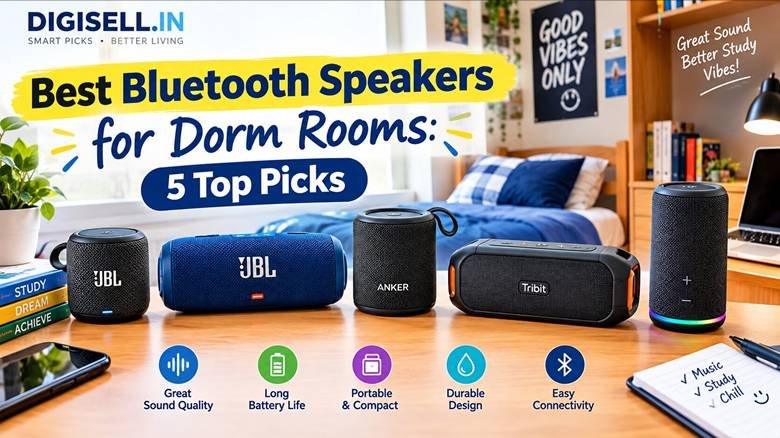
Moving into a college dorm is exciting, but setting up a comfortable space can be challenging. Between a small desk, a shared closet, textbooks, a laptop, and a roommate’s belongings, there is rarely much room for bulky electronics. That is why choosing the right Bluetooth speaker matters.
When I think about the ideal dorm-room speaker, I look beyond loud sound and flashy features. I want something compact enough for a crowded desk, easy to connect to a phone or laptop, reliable during long study sessions, and portable enough to take to a friend’s room or a weekend trip.
A good speaker should make a dorm feel more personal without disturbing everyone on the floor.
In this guide, I compare five Bluetooth speakers worth considering for American college students, from affordable mini speakers to premium portable options. The recommendations focus on size, sound quality, portability, battery life, durability, and overall value.
Quick Comparison: Best Bluetooth Speakers for Dorm Rooms
| Bluetooth Speaker | Best For | Main Advantage |
| JBL Flip 7 | Best overall | Balanced sound and rugged design |
| JBL Go 5 | Small desks and tight budgets | Ultra-compact size |
| Anker Soundcore 3 | Budget-conscious students | Practical everyday listening |
| Sony SRS-XB100 | Minimalist dorm setups | Small, lightweight design |
| Ultimate Ears WONDERBOOM 4 | Shared spaces and portability | 360-degree sound |
These are recommendations based on product features and suitability for dorm life, not a claim that I personally tested every model. Check current US pricing and availability before purchasing.
1. JBL Flip 7 — Best Overall Bluetooth Speaker for Dorm Rooms
Best for: Students who want versatile sound for studying, relaxing, and casual get-togethers.
The <a href=”https://www.jbl.com/” target=”_blank”>JBL Flip 7</a> is a strong option for students who want one speaker that can handle several everyday situations. Its cylindrical design makes it easy to place on a desk, bookshelf, or bedside table without taking up too much room.
What appeals to me about this type of speaker is its versatility. During a study session, you can play instrumental music at a low volume. Later, it can provide a fuller sound for a movie night or a small gathering with friends.
The Flip 7 also offers IP68-rated dust and water protection, making it more suitable for outdoor use than a delicate desktop speaker. Its battery life is rated for up to 16 hours under specified conditions, although actual playback time depends on volume and usage. Source: What Hi-Fi’s 2026 Bluetooth speaker guide
Why I would consider it for a dorm:
- Compact, portable construction.
- Full sound for music, videos, and podcasts.
- Water and dust resistance for everyday peace of mind.
- Suitable for use in a dorm, at a picnic, or on a weekend trip.
Potential drawback: It costs more than a basic mini speaker, and its capabilities may be unnecessary if you only listen to quiet background music while studying.
My take: If I wanted one versatile Bluetooth speaker for college life and could comfortably afford the price, the JBL Flip 7 would be near the top of my shortlist.
2. JBL Go 5 — Best for Small Desks and Minimalist Dorm Rooms
Best for: Students who prioritize compact size and easy portability.
A crowded dorm desk can make even a small gadget feel inconvenient. A compact speaker such as the JBL Go 5 is worth considering when every inch of space matters.
This style of speaker is especially practical for students who mainly listen to podcasts, online lectures, casual playlists, and background music. It is also easy to carry between rooms or pack into a backpack.
The Go 5 is listed among the compact Bluetooth speaker options in What Hi-Fi’s 2026 guide. Its small footprint is the main reason to consider it over a larger portable model. Source: What Hi-Fi
Why it suits dorm living:
- Takes up little desk or bedside-table space.
- Easy to carry around campus and on trips.
- Useful for everyday listening without a complicated setup.
- A sensible option for students who do not need powerful bass.
Potential drawback: A mini speaker cannot deliver the same depth and fullness as a larger model. If you listen to bass-heavy music or want a speaker for gatherings, consider a bigger option.
My take: For a first-year student furnishing a tiny dorm on a tight budget, this is the kind of compact speaker I would investigate first. Compare its current price with older JBL models before deciding.
3. Anker Soundcore 3 — Best Budget-Friendly Everyday Speaker
Best for: Students who want practical sound without paying premium-speaker prices.
College expenses add up quickly. After paying for textbooks, supplies, food, and other essentials, spending a large amount on a Bluetooth speaker may not be a priority.
The Anker Soundcore 3 is worth considering because it focuses on everyday portable listening rather than premium styling. It can be a practical choice for music, podcasts, video streaming, and background audio around a small room.
RTINGS’ 2026 budget-speaker comparison notes that the Soundcore 3 can get loud enough for an average-sized room, although its bass and sound consistency have limitations compared with more capable speakers. Source: RTINGS
Why I like the value proposition:
- A more budget-oriented alternative to premium portable speakers.
- Practical for daily music and spoken-word content.
- Portable enough for a desk, shelf, or bedside table.
- A reasonable starting point for students who do not need advanced features.
Potential drawback: Small portable speakers generally cannot reproduce very deep bass. Sound quality may also become less refined at high volume.
My take: I would compare the Soundcore 3 with other affordable speakers before spending more. For ordinary dorm-room listening, a good-value model may be all you need.
4. Sony SRS-XB100 — Best for Lightweight, Everyday Portability
Best for: Students who want a compact speaker for their dorm and occasional trips.
Some students prefer to keep their setup simple. They want a speaker that fits beside a laptop, can be moved easily, and does not require much effort to use.
The Sony SRS-XB100 fits this general category. Its compact design makes it suitable for students who regularly move between a dorm room, a friend’s apartment, a study space, and outdoor activities.
RTINGS includes the Sony SRS-XB100 among the small Bluetooth speakers worth considering, making it a useful model to compare against other mini speakers. Source: RTINGS small Bluetooth speaker guide
Why it could work well in a dorm:
- Small form factor for limited desk space.
- Convenient for carrying between locations.
- Appropriate for casual listening and podcasts.
- A practical alternative to larger, heavier speakers.
Potential drawback: Its small size limits the amount of deep bass and room-filling sound it can produce. Students who want strong low-frequency impact should compare it with a larger speaker before buying.
My take: If portability matters more than maximum loudness, the Sony SRS-XB100 deserves a place on your shortlist.
5. Ultimate Ears WONDERBOOM 4 — Best for Shared Spaces and Portable Listening
Best for: Students who want sound that spreads around a small space.
A dorm room is not always just a bedroom. It may also be where friends gather, roommates relax, or students watch videos together between classes.
The Ultimate Ears WONDERBOOM 4 is worth considering because its 360-degree sound design is intended to distribute audio around the speaker rather than direct it mainly toward one listening position. This can be useful when people are sitting in different parts of a room.
It is also designed for portable use, making it an option for students who want to take their music beyond their dorm.
Why it stands out:
- 360-degree sound for casual group listening.
- Compact construction for moving between locations.
- Rugged, water-resistant design suited to portable use.
- A practical alternative to traditional front-facing mini speakers.
Potential drawback: It may cost more than a basic budget speaker, and 360-degree sound does not mean everyone will hear identical audio at every distance.
My take: If friends often visit your room or you want a speaker for dorm use and outdoor activities, the WONDERBOOM 4 is worth comparing with the JBL Flip 7.
What Matters Most When Buying a Dorm-Room Speaker?
Before buying a speaker, I would focus on the features that make a genuine difference in a shared living environment.
1. Size and Desk Space
Look at the space available beside your laptop, monitor, books, or bedside lamp. A small cylindrical or square speaker may fit more comfortably than a large party speaker.
For most students, portability is more useful than maximum output.
2. Sound Quality at Low Volume
This is one of the most important considerations for dorm life.
A speaker should sound clear at moderate or low volume, not just when turned up. That matters when listening to music while studying, watching videos at night, or sharing a room with someone who has a different schedule.
Remember that even a small speaker can disturb a roommate. Headphones are the better choice during quiet hours.
3. Battery Life and Charging
A portable speaker can be convenient when you do not want another device permanently occupying an outlet.
Check the manufacturer’s stated battery life, charging connection, and charging time. Advertised playback figures are estimates under specific conditions; louder listening can reduce battery life.
4. Water and Dust Resistance
Accidental spills, dusty shelves, and outdoor trips are all realistic parts of student life.
An IP rating helps you understand the protection a speaker offers, but the exact rating matters. Water resistance does not mean every model can be submerged safely, and charging ports should be handled according to the manufacturer’s instructions.
5. Price and Long-Term Value
Set a spending limit before shopping. Students who mainly listen to podcasts or study music may not need a premium model.
Compare the total cost, warranty, return policy, charging accessories, and current discounts. An older model on sale may offer better value than a newly released speaker.
Which Bluetooth Speaker Is Best for Your Dorm Lifestyle?
Here is how I would narrow the options based on everyday student needs.
- For an all-around choice: JBL Flip 7.
- For a very small desk: JBL Go 5.
- For budget-conscious everyday listening: Anker Soundcore 3.
- For lightweight portability: Sony SRS-XB100.
- For shared listening and casual gatherings: Ultimate Ears WONDERBOOM 4.
There is no single best speaker for every student. The right choice depends on your room size, budget, listening habits, and how often you plan to carry the speaker around.
How to Use a Bluetooth Speaker Without Annoying Your Roommate
Even an excellent speaker can become a problem if it is used without considering the people nearby.
These simple habits can help make dorm life more comfortable:
- Agree on volume limits. Ask your roommate what volume works for both of you.
- Respect quiet hours. Check your college’s residence-hall policies rather than assuming every campus follows the same schedule.
- Keep bass under control. Low frequencies can travel through walls and floors, even when the music does not seem loud inside your room.
- Use headphones late at night. They are usually the most considerate option for private listening.
- Avoid placing the speaker against a shared wall. Positioning it away from the wall may help reduce direct vibration transmission, although it will not eliminate sound traveling through the building.
A good dorm speaker should improve your daily routine, not create unnecessary conflict.
Frequently Asked Questions
What is the best Bluetooth speaker for a college dorm room?
The JBL Flip 7 is a strong all-around option for students who want portable sound, durability, and versatility. For a smaller desk or a simpler listening setup, a mini speaker may be a better fit.
Are small Bluetooth speakers loud enough for dorm rooms?
Yes. Many compact Bluetooth speakers can provide enough sound for personal listening in a small room. The key is choosing a model with clear audio at moderate volume rather than focusing only on maximum loudness.
Should I buy a waterproof Bluetooth speaker for college?
Water resistance is a useful extra if you plan to carry the speaker outdoors, use it near a pool, or take it on trips. However, it should not be the deciding factor if your speaker will stay on a dry desk.
Is an expensive Bluetooth speaker worth it for a dorm?
Not necessarily. A premium speaker may provide fuller sound, stronger bass, or additional features, but students who mainly listen to podcasts and background music can often choose a more affordable model.
Can I use a Bluetooth speaker with both my phone and laptop?
Many Bluetooth speakers can connect to phones and laptops, but simultaneous connections and automatic switching vary by model. Check the manufacturer’s specifications if switching between devices frequently is important to you.
Final Verdict: Choosing the Right Dorm-Room Speaker
For college students in the United States, the best Bluetooth speaker is not necessarily the biggest, loudest, or most expensive model. It is the one that fits comfortably into a small room, sounds good at everyday listening levels, and is easy to carry when college life takes you somewhere else.
I would start by comparing the JBL Flip 7 for versatility, the JBL Go 5 for compactness, and the Anker Soundcore 3 for budget-friendly listening. The Sony SRS-XB100 and Ultimate Ears WONDERBOOM 4 are also worth considering if portability or sound distribution is a priority.
Before purchasing, compare current prices, product specifications, and return policies from reputable US retailers. The right choice should fit both your dorm setup and your student budget.
A final tip: In a shared dorm, good sound at a considerate volume is more valuable than maximum volume. Choose a speaker that makes your room feel like home while keeping your roommate comfortable, too.
Affiliate disclosure: This article may contain affiliate links. If you purchase through qualifying links, we may earn a commission at no additional cost to you. Recommendations are intended to help readers compare products; prices and availability may change.
Best Bluetooth Speakers for Bass: My Experience, Top Picks, and Buying Guide

When I look for a Bluetooth speaker, one of the first things I consider is bass quality. A speaker may sound clear at low volume, but when I play energetic music, hip-hop, EDM, or my favorite Bollywood tracks, I want a deeper, richer sound that makes the music feel more alive.
Finding the best Bluetooth speakers for bass is not simply about choosing the loudest speaker. I look for a combination of deep bass, clear vocals, balanced sound, reliable battery life, and portability. A speaker that delivers powerful low frequencies without making the rest of the music sound muddy is usually a better choice than one that focuses only on booming bass.
In this guide, I share my practical perspective on choosing bass-heavy Bluetooth speakers, the models worth comparing, and the features that matter most before buying one.
What Makes a Bluetooth Speaker Good for Bass?
Before choosing a speaker, I think it is important to understand what creates a satisfying bass experience.
1. Deep and powerful low frequencies
Good bass should sound full and controlled. It should add depth to the music without overpowering vocals, guitars, or other instruments. I would prioritize a speaker that delivers clean bass at different volume levels rather than one that produces excessive vibration.
2. Passive radiators and speaker design
Many portable Bluetooth speakers use passive radiators to improve low-frequency output without requiring a large traditional subwoofer. Their design can help create a fuller sound from a compact enclosure.
However, passive radiators alone do not guarantee excellent bass. The speaker’s tuning, enclosure, drivers, and digital signal processing also influence the result.
3. Bass performance at high volume
Some speakers sound impressive at moderate volume but lose bass depth or become harsh when turned up. When comparing options, I would pay attention to how well each speaker maintains sound quality at higher listening levels.
4. Battery life and portability
For outdoor gatherings, travel, and everyday listening, battery performance matters. A speaker with powerful bass is less convenient if it needs frequent charging or is too heavy to carry comfortably.
Best Bluetooth Speakers for Bass: Top Models to Compare
These are some of the popular Bluetooth speaker models I would shortlist when looking for bass-focused sound. They suit different budgets, listening habits, and portability requirements.
1. JBL Boombox 3 — Best for Powerful Bass and Outdoor Parties
The JBL Boombox 3 is worth considering if my priority is powerful sound for larger rooms, outdoor gatherings, and parties.
Its larger enclosure and dedicated low-frequency driver design help it deliver a fuller, more substantial sound than many pocket-sized speakers. It is designed for listeners who want music to feel energetic, especially with bass-heavy genres.
What I like about its design:
- A bass-focused sound system designed for powerful playback.
- A rugged, portable form factor with a convenient carrying handle.
- Water- and dust-resistant construction.
- A suitable option for listeners who regularly play music outdoors.
What I would consider before buying: It is considerably larger and more expensive than compact portable speakers. If I mainly listen at my desk or carry a speaker in a backpack, a smaller model may be more practical.
Best for: Bass lovers, outdoor parties, and larger listening spaces.
2. JBL Charge 5 — Best Balance of Bass and Portability
The JBL Charge 5 is a strong option for people who want satisfying bass without carrying a large party speaker.
Its portable design combines a racetrack-shaped driver, a separate tweeter, and dual passive radiators. This arrangement is intended to provide punchy low frequencies while maintaining clarity across the rest of the music.
I would consider this type of speaker for everyday listening, weekend trips, picnics, and casual gatherings.
Key reasons to consider it:
- A compact design that is easier to carry than a large boombox.
- A dedicated tweeter for high-frequency detail.
- A rugged build with water- and dust-resistant protection.
- A built-in power bank for charging compatible devices.
What to keep in mind: Although its bass can be satisfying for its size, it cannot reproduce the deepest low frequencies with the same physical impact as a substantially larger speaker.
Best for: Everyday listening, travel, and listeners who want balanced sound with punchy bass.
3. JBL Xtreme 4 — Best for Portable, Full-Bodied Sound
The JBL Xtreme 4 is another model I would compare when shopping for a portable speaker with strong bass.
It sits between smaller everyday speakers and larger party-oriented models in terms of size and intended use. It is designed to provide a fuller sound for indoor listening, outdoor activities, and small gatherings.
Why it deserves consideration:
- A portable format intended for powerful sound.
- A design featuring dedicated drivers and passive radiators.
- Rugged construction for outdoor use.
- A replaceable battery design, depending on the model and market configuration.
Potential drawback: Its size and price may be excessive for someone who only needs background music in a bedroom or office.
Best for: Listeners who want substantial sound in a speaker that remains portable.
4. Ultimate Ears MEGABOOM 4 — Best for Outdoor Listening
If I wanted a speaker for outdoor adventures, the Ultimate Ears MEGABOOM 4 would be another model to compare.
Its cylindrical design is intended to distribute sound around the listening area. It is suitable for casual music listening at picnics, by the pool, or during travel.
Reasons to consider it:
- A rugged, portable design.
- Water-resistant construction suited to outdoor activities.
- Convenient handling and carrying.
- A sound profile designed for general music listening.
Bass consideration: It can provide enjoyable low-frequency impact for its size, but listeners seeking the deepest, most forceful bass may prefer a larger speaker designed specifically for higher output.
Best for: Outdoor activities, travel, and social listening.
5. Sony ULT FIELD 1 — Best Compact Option for Bass-Focused Listening
The Sony ULT FIELD 1 is worth comparing if I want a relatively compact speaker with a bass-focused listening mode.
Sony’s ULT branding emphasizes low-frequency impact. This makes the model relevant for people who enjoy modern pop, electronic music, hip-hop, and other bass-heavy genres.
What makes it interesting:
- A compact design for everyday portability.
- A ULT sound feature intended to emphasize bass.
- Water- and dust-resistant construction.
- A strap for convenient carrying.
What I would check: Bass enhancement can make some tracks sound more exciting, but it does not automatically improve every song. I would compare the standard and enhanced sound modes to determine which sounds more natural.
Best for: Listeners who prefer compact speakers with an emphasis on bass.
6. Soundcore Motion Boom Plus — Best Value-Oriented Option to Compare
The Soundcore Motion Boom Plus is worth considering for shoppers looking for powerful portable sound without moving straight to premium-priced models.
Its larger portable enclosure and bass-focused tuning make it a relevant alternative for outdoor listening and informal parties.
Potential advantages:
- A portable design with a carrying handle.
- Bass-focused sound tuning.
- Water-resistant construction.
- A feature set aimed at outdoor music playback.
What I would check: Compare its current price, available EQ settings, battery specifications, and sound quality with competing models before making a purchase.
Best for: Budget-conscious shoppers who want a larger portable speaker with energetic bass.
Quick Comparison: Which Bass Speaker Should I Choose?
| Speaker | Main strength | Best use |
| JBL Boombox 3 | Powerful, full-bodied sound | Parties and outdoor gatherings |
| JBL Charge 5 | Portable sound with punchy bass | Everyday listening |
| JBL Xtreme 4 | Full sound in a portable format | Travel and small gatherings |
| Ultimate Ears MEGABOOM 4 | Rugged, around-the-speaker listening | Outdoor activities |
| Sony ULT FIELD 1 | Compact design with bass enhancement | Bass-focused personal listening |
| Soundcore Motion Boom Plus | Value-oriented, energetic sound | Outdoor music on a budget |
Prices and availability can change. These are shortlist recommendations based on product design and intended use, not the results of a controlled listening test.
How I Would Choose the Best Bluetooth Speaker for Bass
When comparing speakers, I would focus on the following factors instead of relying only on marketing claims.
Check the type of bass you prefer
Not everyone wants the same bass response.
- Deep bass: Better suited to electronic music, hip-hop, and tracks with strong sub-bass.
- Punchy bass: Adds impact to drums, dance music, and energetic pop.
- Balanced bass: Provides low-frequency depth without overpowering vocals and instruments.
For everyday listening, I generally recommend looking for controlled bass rather than the strongest possible bass boost.
Compare the speaker at different volumes
A speaker may sound impressive at moderate volume but lose clarity when played loudly. Before buying, I would look for reliable reviews that discuss distortion, bass compression, and sound consistency at high volume.
If possible, I would compare the speakers using the same song, the same approximate volume, and similar listening conditions.
Look at battery life carefully
Manufacturers usually quote battery life under specified test conditions. Actual performance depends on volume, sound settings, wireless features, and other factors.
If I plan to use a speaker outdoors, I would choose one with sufficient battery capacity for my typical listening session rather than relying exclusively on the maximum advertised figure.
Consider water resistance
For poolside listening, camping, or outdoor gatherings, water and dust protection can be useful. I would check the exact IP rating and follow the manufacturer’s guidance because water resistance does not mean every speaker is suitable for every water-related activity.
Think about the room or outdoor space
A compact speaker may work perfectly in a bedroom or home office, while a larger model may be more suitable for an open living area or an outdoor gathering.
I would match the speaker’s size and output to the space rather than automatically buying the biggest model.
Which Bluetooth Speaker Is Best for Different Music Genres?
The ideal choice also depends on the music I listen to most often.
For hip-hop and EDM: I would compare the JBL Boombox 3, JBL Xtreme 4, and Sony ULT FIELD 1, paying particular attention to low-frequency depth and how the bass sounds with enhancement enabled.
For Bollywood and pop music: I would prioritize speakers that deliver punchy bass without making vocals sound distant. The JBL Charge 5 and JBL Xtreme 4 are reasonable models to shortlist.
For rock and acoustic music: I would look for a balanced sound profile with clear vocals, realistic instruments, and bass that supports the music rather than dominating it.
For outdoor parties: I would prioritize output, battery performance, ruggedness, and how well the speaker maintains sound quality in an open space. The JBL Boombox 3 and Soundcore Motion Boom Plus are models worth comparing.
Common Mistakes to Avoid When Buying a Bass-Heavy Speaker
I would avoid making these mistakes when choosing a speaker.
- Buying based only on wattage: Power ratings do not tell the whole story about bass depth or sound quality.
- Assuming bigger bass is always better: Excessive bass enhancement can make vocals and instruments sound muddy.
- Ignoring portability: A large speaker may be inconvenient if I need something for daily travel.
- Overlooking connectivity: Check Bluetooth compatibility, pairing features, and whether the speaker supports the functions you actually need.
- Ignoring current pricing: Compare the final price and warranty terms across reputable sellers instead of relying on the advertised launch price.
- Expecting subwoofer performance from a tiny speaker: Small portable speakers have physical limitations, especially at very low frequencies.
Frequently Asked Questions
Which Bluetooth speaker has the best bass?
The best choice depends on the amount of bass, portability, and budget I need. The JBL Boombox 3 is worth comparing for powerful output, while the JBL Charge 5 is a more portable option for everyday listening. The Sony ULT FIELD 1 is worth considering if I prefer a compact speaker with a bass-enhancement feature.
Are JBL speakers good for bass?
Several JBL portable speakers are designed to deliver punchy, energetic bass. However, performance varies by model, and a larger speaker generally has more potential for strong low-frequency output than a much smaller one.
Can a small Bluetooth speaker produce deep bass?
Small speakers can produce enjoyable bass through driver design, passive radiators, and digital processing. However, they generally cannot reproduce the deepest frequencies at the same volume and physical impact as larger systems.
Is a subwoofer necessary for powerful bass?
Not necessarily. A well-designed portable Bluetooth speaker can provide satisfying bass for everyday listening. A dedicated subwoofer is more appropriate when the goal is stronger deep-bass reproduction in a home audio setup.
What should I look for when buying a Bluetooth speaker for bass?
I would prioritize bass extension, sound clarity, distortion performance, battery life, portability, durability, and current price. Reliable listening tests and comparisons are more useful than relying on wattage or bass marketing alone.
Final Thoughts: Finding the Right Bass Bluetooth Speaker
For me, choosing the best Bluetooth speaker for bass comes down to finding the right balance between low-frequency impact, sound clarity, portability, and price.
If powerful sound for parties is the priority, I would start by comparing the JBL Boombox 3 with other larger portable speakers. If I wanted a more practical everyday option, I would consider the JBL Charge 5. For compact bass-focused listening, the Sony ULT FIELD 1 deserves a place on the shortlist.
Before making a final decision, I would compare current prices, read independent listening tests, and check the warranty and return policy. The best speaker is ultimately the one that delivers the type of bass I enjoy without sacrificing the rest of the music.
Whether I am listening to hip-hop, EDM, Bollywood songs, or rock, a well-matched Bluetooth speaker can make everyday music listening more enjoyable.
Affiliate disclosure: This article may contain affiliate links. If you purchase through qualifying links, I may earn a commission at no additional cost to you. Recommendations should be based on product suitability and available information, and prices and specifications should be verified before purchase.
Best Bluetooth Speakers in the USA: Top Picks for 2027
Best Bluetooth Speakers for Dorm Rooms: 5 Top Picks
Best Bluetooth Speakers for Garage: 5 Top Picks
Best Bluetooth Speakers for Hiking: 5 Portable Picks
Best Bluetooth Speakers for Tailgating: 5 Game-Day Picks
Best Bluetooth Speakers for Poolside Use: 5 Waterproof Picks
Best Bluetooth Speakers for Picnics: 5 Portable Picks
Best Bluetooth Speakers for Travel: 5 Portable Picks
Best Bluetooth Speakers for Bass: 6 Top Picks
Best Bluetooth Speakers for Home in 2026: My Buying Guide
Best Bluetooth Speakers With Long Battery Life (2026 Guide)
Bose SoundLink Flex Portable Bluetooth Speaker Review
Rugged Bluetooth Speaker: Best Outdoor & Waterproof Speakers
Portable Wireless Speaker: Buying Guide & Tips
Portable Party Speaker: My Experience, Buying Guide & What I Look For
Portable Bluetooth Party Speaker: JBL Flip 5 Review
Loudest Portable Bluetooth Speaker: My Personal Experience & Buying Guide
Portable Bluetooth Speaker Waterproof: My Personal Buying Experience
Best Bluetooth Speakers Under $50: My Real-World Buying Guide
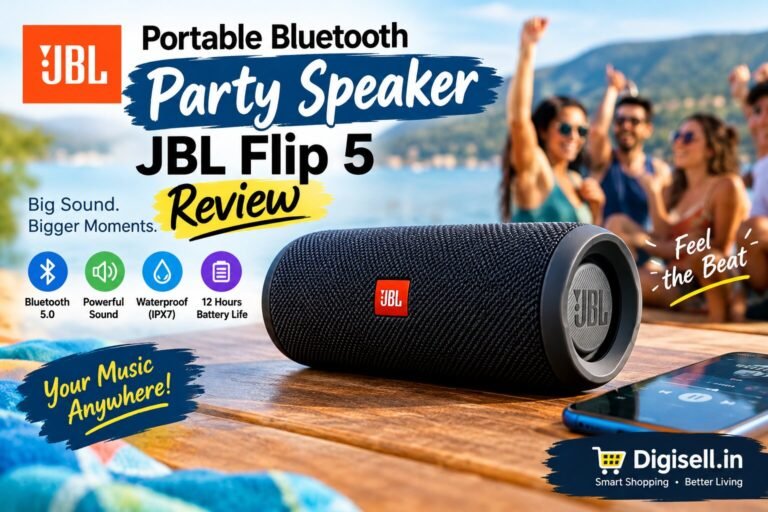
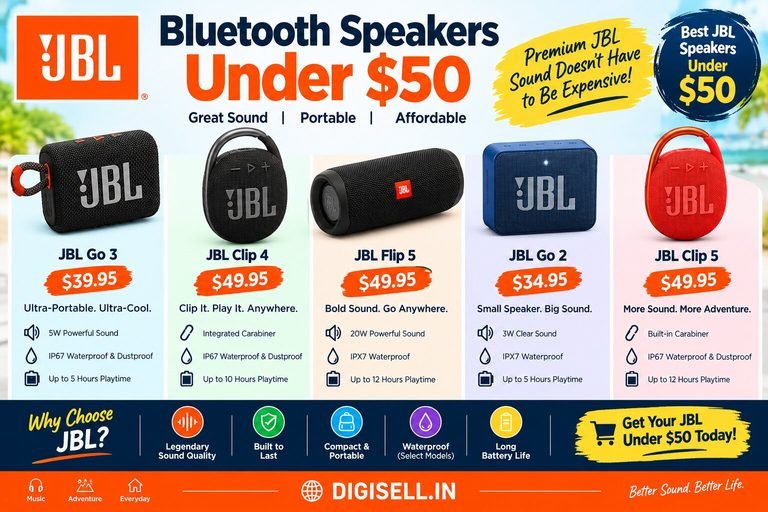
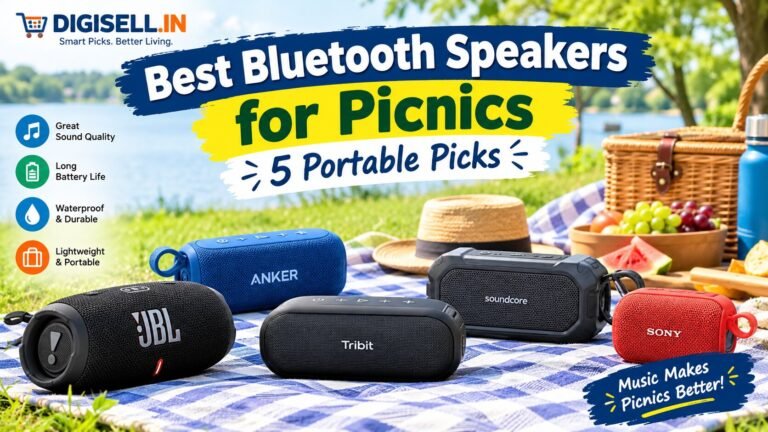
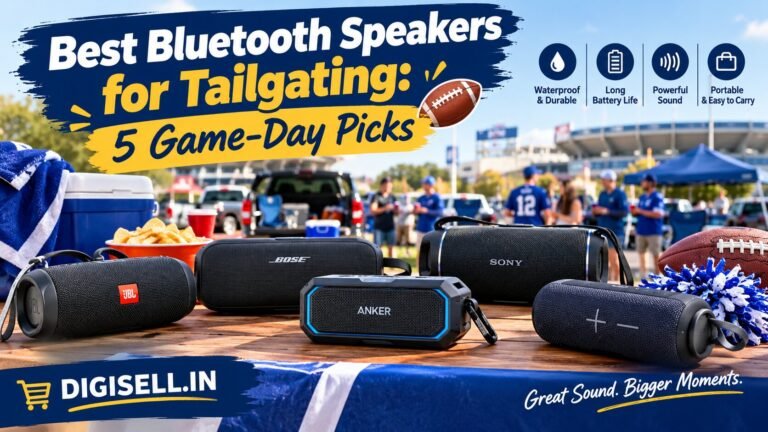
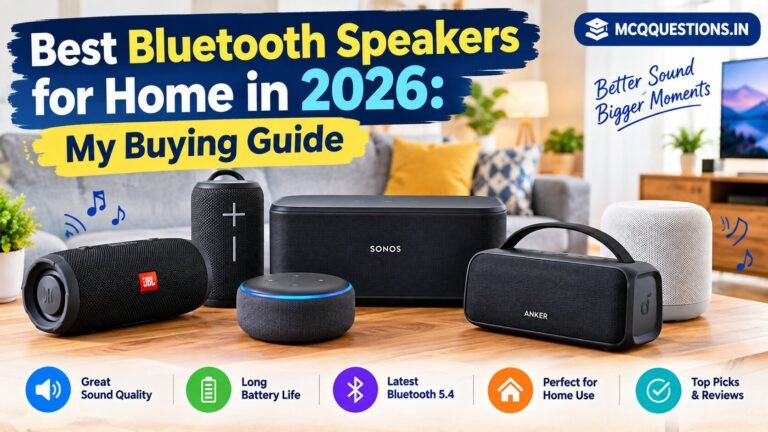
12 Comments